Breast cancer is the most common malignant tumor among women and originates from the epithelial cells of the mammary ducts or lobules. Based on molecular classification according to estrogen receptor (ER), progesterone receptor (PR), human epidermal growth factor receptor 2 (HER2), and the proliferation index Ki-67, breast cancer is categorized into Luminal A, Luminal B, HER2-enriched, and triple-negative subtypes, each with distinct treatment strategies and prognostic outcomes. With standardized treatment, the 5-year survival rate for early-stage breast cancer can exceed 90%. Even patients with advanced disease may achieve prolonged survival and maintain a good quality of life through novel therapeutic agents.
· Pathogenic mutations in BRCA1/2 and a definite family history of breast cancer
· Early menarche (<12 years) and late menopause (>55 years)
· Nulliparity, first full-term pregnancy after 35 years of age, or no history of breastfeeding
· Postmenopausal obesity and excessive body fat
· Long-term hormone replacement therapy and alcohol consumption
· Prior history of high-dose chest radiotherapy and atypical breast hyperplasia
Long-term estrogen exposure promotes continuous proliferation of mammary ductal epithelial cells, leading to the accumulation of genetic mutations. Approximately 5%–10% of breast cancer cases have a hereditary background, primarily involving germline mutations in DNA damage repair genes such as BRCA1 and BRCA2. Sporadic breast cancer commonly harbors mutations in genes such as PIK3CA, TP53, and GATA3, resulting in uncontrolled cellular proliferation and evasion of apoptosis. Increased breast density and chronic inflammation also contribute to remodeling of the tumor microenvironment and promote carcinogenesis.
The most common presentation of breast cancer is a painless breast mass with a hard consistency and poorly defined margins. Other suspicious signs include bloody or serous nipple discharge unrelated to lactation; nipple retraction or deviation; skin dimpling (“dimple sign”) or a peau d’orange appearance of the breast skin; and painless, unilateral axillary lymphadenopathy. Inflammatory breast cancer is rare but highly aggressive. It typically presents with diffuse breast redness, swelling, and increased skin temperature and is easily misdiagnosed as acute mastitis, thus requiring particular clinical vigilance.
· Surgery: Breast-conserving surgery combined with sentinel lymph node biopsy has become the standard surgical approach for early-stage breast cancer, allowing complete tumor removal while preserving breast appearance. Mastectomy is indicated for patients with multifocal disease, extensive intraductal components, or high hereditary risk and may be followed by immediate or delayed breast reconstruction.
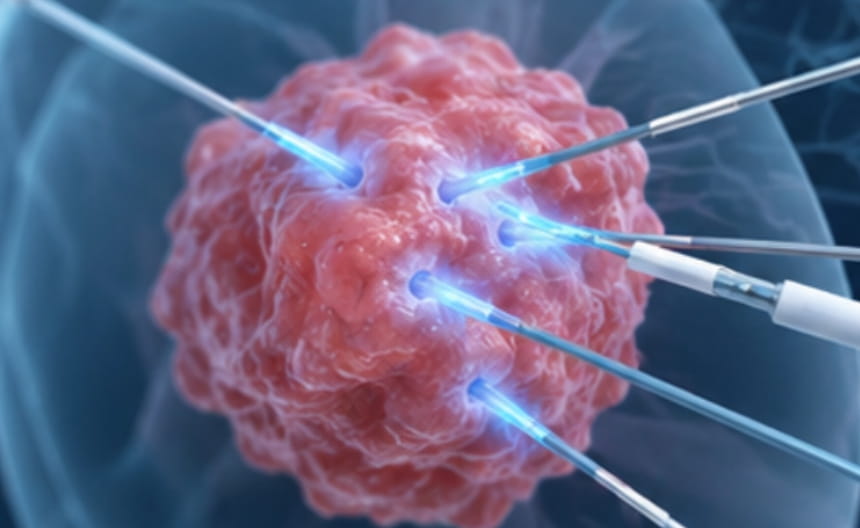
· Minimally invasive therapy: Image-guided radiofrequency ablation, cryoablation, and high-intensity focused ultrasound (HIFU) are noninvasive or minimally invasive techniques that may be used for patients with early-stage small breast cancer who are unable or unwilling to undergo surgery. Endoscopic-assisted breast surgery can achieve radical tumor resection through a small axillary incision with minimal visible scarring. In addition, vacuum-assisted breast biopsy systems are widely used for the excision of benign breast lesions and for diagnostic biopsy procedures.
· Chemoradiotherapy: Postoperative radiotherapy can significantly reduce the risk of local recurrence, particularly in patients undergoing breast-conserving surgery. Adjuvant chemotherapy is determined according to molecular subtype and recurrence risk. Some patients with low-risk Luminal-type Breast Cancer may safely avoid chemotherapy, whereas patients with triple-negative or HER2-positive subtypes often require systemic chemotherapy.
· Targeted and immunotherapy: Anti-HER2 targeted therapy has markedly improved the prognosis of HER2-positive breast cancer. CDK4/6 inhibitors combined with endocrine therapy have become an important treatment strategy for advanced hormone receptor–positive breast cancer. Immune checkpoint inhibitors combined with chemotherapy may also be used in selected patients with triple-negative breast cancer.
· Other Treatments: Endocrine therapy, such as aromatase inhibitors and selective estrogen receptor modulators, is the cornerstone of long-term management for patients with hormone receptor–positive breast cancer. For patients with bone metastases, bone-modifying agents may be added as supportive treatment. Psychological support and lymphedema management can further improve rehabilitation outcomes and quality of life.
Mammography combined with ultrasound is the gold standard for screening of breast cancer, with risk assessment performed according to the BI-RADS classification system. Breast MRI is particularly suitable for high-risk populations or patients with dense breasts. Core needle biopsy is used to obtain tissue specimens for pathological diagnosis and assessment of biomarkers such as ER, PR, HER2, and Ki-67 to determine the molecular subtype. Genetic counseling and BRCA testing are recommended for patients with a family history of breast cancer or those with early-onset disease.