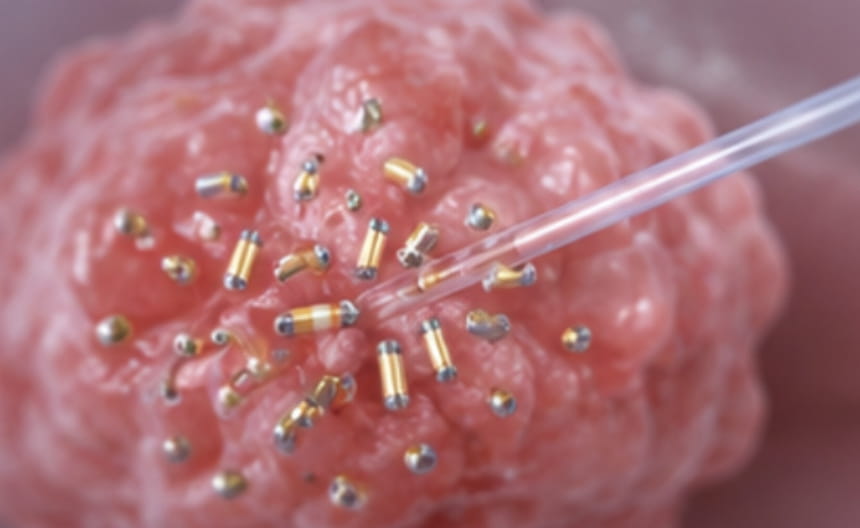
Iodine-125 radioactive seed implantation is a form of brachytherapy in which miniature sealed radioactive sources are precisely implanted directly into the tumor. Its core principle relies on the continuous low-energy gamma rays emitted during the decay of iodine-125 isotopes, which create a high-dose radiation zone within the tumor target volume. This delivers irreversible cytotoxic effects on tumor cells throughout all phases of the cell cycle, while the rapid attenuation of radiation within tissues effectively spares the surrounding normal organs.
Treatment requires meticulous preoperative planning based on a three-dimensional treatment planning system (TPS), which enables individualized design of seed distribution and radiation dose. During the procedure, under real-time CT or ultrasound guidance, specialized puncture needles are used to precisely implant titanium-alloy seeds—each only a few millimeters in length and approximately the size of a grain of rice—into the tumor according to the preplanned arrangement. Iodine-125 has a physical half-life of approximately 59.4 days, allowing it to deliver continuous and stable local irradiation over several months. This sustained radiation effectively covers the tumor cell doubling cycle and helps reduce the risk of tumor repopulation.
· High radiation dose to the target area with minimal exposure to normal tissues: radiation is highly concentrated within the target lesion, while the rapid attenuation of the emitted rays greatly limits the collateral dose to surrounding structures, enabling highly precise treatment.
· Minimally invasive percutaneous approach with excellent tolerability: the procedure is performed via percutaneous puncture with minimal trauma, making it a safe option even for elderly patients or those with significant comorbidities who cannot tolerate surgery.
· Continuous irradiation with enhanced biological efficacy: sustained low-dose-rate radiation compensates for the repair that may occur during the intervals between fractionated external beam radiotherapy sessions, making it effective even for slow-growing solid tumors.
It is primarily indicated for solid tumors that are unresectable, recurrent, or metastatic after radiotherapy and chemotherapy, including primary liver cancer, non-small cell lung cancer, prostate cancer, and pancreatic cancer, as well as recurrent or metastatic tumors of the head and neck and pelvic regions. This technique is often combined with arterial infusion chemotherapy, ablation therapy, targeted therapy, and immunotherapy to synergistically improve local tumor control, prolong survival, and enhance quality of life.
This technique is performed in strict accordance with radiation protection standards, and its safety has been widely validated. It provides a reliable and effective modality for local tumor control within the framework of comprehensive cancer treatment.