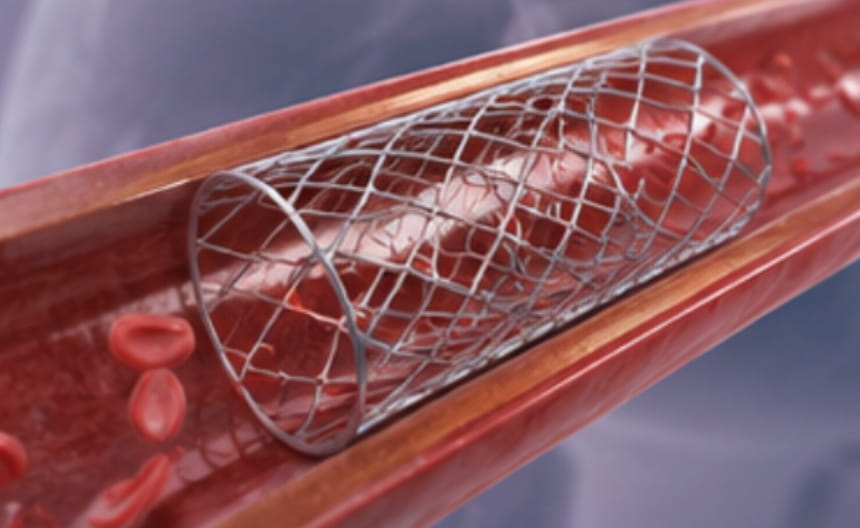
Stent implantation is a palliative interventional technique in which a metallic alloy stent is precisely placed, under imaging or endoscopic guidance, into a physiological lumen severely narrowed by tumor compression or invasion, thereby rapidly relieving obstruction and restoring patency. This technique provides an immediate and effective solution for critical complications caused by advanced malignancies, such as dysphagia, obstructive jaundice, and dyspnea.
During the procedure, a hydrophilic guidewire is first advanced across the stenotic segment, followed by balloon predilation when necessary. A self-expanding metallic stent is then deployed along the guidewire, and under imaging guidance, the stent expands to immediately reconstruct the obstructed lumen. Available stent types include covered and uncovered stents, which can be selected according to the characteristics of the lesion. In some cases, the stent may also be loaded with radioactive seeds to provide intraluminal brachytherapy.
· Immediate relief of obstruction with rapid symptom improvement: for emergencies such as dysphagia and biliary hypertension caused by malignant obstruction, therapeutic effects can often be observed immediately after the procedure, significantly improving quality of life.
· Minimally invasive procedure with high tolerability: avoids the trauma associated with open surgery and is generally well tolerated even by elderly patients and those with end-stage disease.
· It can be combined with radiotherapy to prolong luminal patency: radioactive seed-loaded stents enable simultaneous intraluminal brachytherapy, helping delay tumor-related restenosis.
It is widely used for the palliative treatment of malignant luminal obstructions, including dysphagia caused by esophageal cancer, obstructive jaundice due to malignant biliary obstruction, dyspnea resulting from tracheal stenosis, malignant colorectal obstruction, and superior vena cava syndrome.