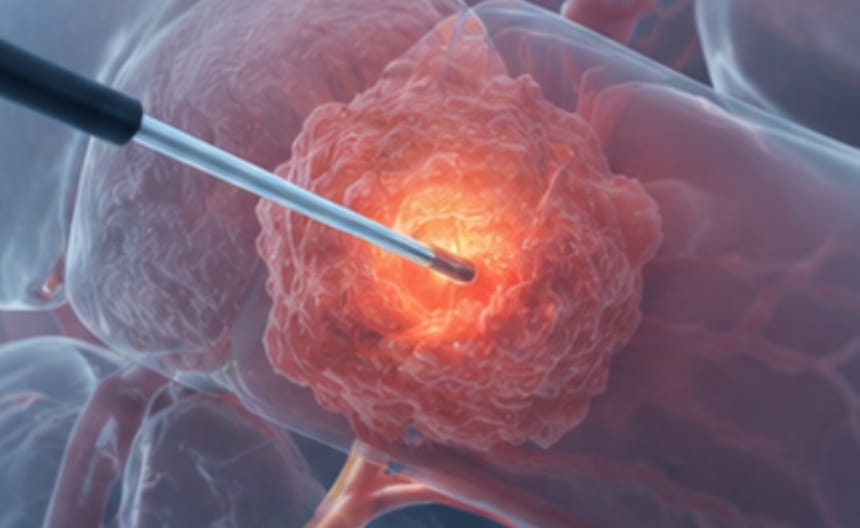
Radiofrequency ablation (RFA) is a minimally invasive interventional technique that uses high-frequency alternating electrical current to induce rapid ionic oscillation and frictional heating within the target tissue. This rapidly elevates the local temperature to 60℃–100℃, leading to protein denaturation and coagulative necrosis of tumor cells. With its well-established mechanism and controllable ablation zone, RFA has become one of the most widely used in situ tumor ablation modalities in clinical practice in China.
During the procedure, an electrode needle is precisely inserted into the tumor under imaging guidance. Radiofrequency energy delivered by the generator creates a spherical ablation zone centered around the needle tip. Depending on the size of the tumor, different electrode configurations may be selected, including single electrodes, clustered electrodes, or expandable multi-tined umbrella-shaped electrodes. Power output and treatment duration can be adjusted in real time to ensure complete tumor coverage and the establishment of an adequate safety margin around the lesion.
· Proven efficacy supported by strong clinical evidence: for early-stage small hepatocellular carcinoma, radiofrequency ablation can achieve curative outcomes and has been recommended by both domestic and international guidelines as a first-line curative treatment option.
· Convenient, minimally invasive, and cost-effective: performed through a percutaneous puncture approach with only needle-sized skin entry sites, allowing rapid postoperative recovery and a shorter hospital stay.
· Thermal coagulation with simultaneous hemostatic effect: the thermal effect not only destroys tumor tissue but also coagulates small blood vessels, thereby reducing the risk of intraoperative and postoperative bleeding.
It is indicated for solid tumors such as solitary or multiple liver cancers and liver metastases measuring ≤5 cm in diameter, primary and metastatic lung cancers, renal cancers, and osteoid osteomas. For unresectable or recurrent tumors, it can also serve as an important palliative cytoreductive strategy to prolong survival.