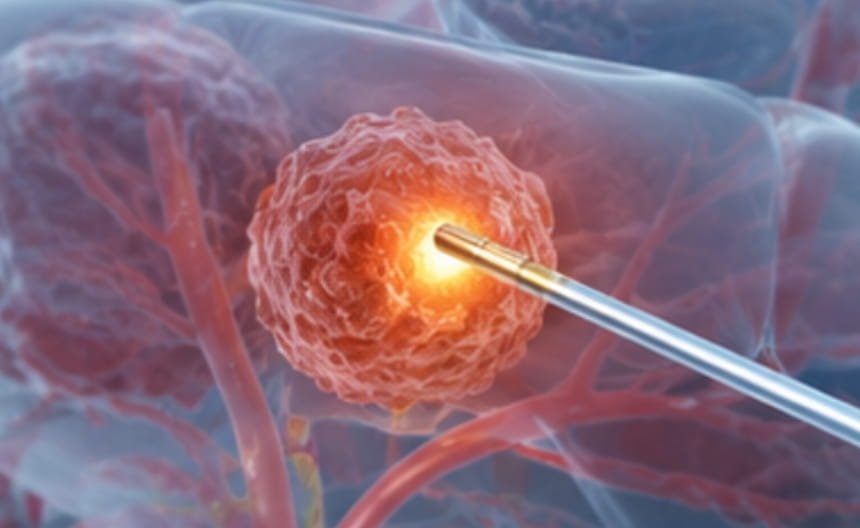
Microwave ablation (MWA) uses a high-frequency electromagnetic field to induce rapid rotation and friction of water molecules, generating heat that raises the temperature of tumor tissue to levels sufficient to cause coagulative necrosis within minutes. Compared with radiofrequency ablation, microwave ablation achieves faster heating, creates larger ablation zones, and is less affected by tissue carbonization and the "heat-sink effect." These advantages enable more efficient destruction of hypervascular and relatively large tumors.
During the procedure, one or more microwave antennas are precisely inserted into the predetermined target location under ultrasound or CT guidance and connected to a microwave generator. Based on the preoperative treatment plan, the power output and ablation duration are carefully set to rapidly create a spherical ablation zone within a short time. The use of multiple antennas in combination allows conformal ablation, enabling effective coverage of irregularly shaped lesions.
· Rapid heating with short treatment duration: instantaneous high temperatures enable swift tumor destruction, shortening procedural time and reducing collateral thermal injury to surrounding tissues.
· Large ablation zone with minimal influence from blood flow: the stable high-temperature field overcomes the heat-sink effect caused by blood perfusion, reducing the risk of residual tumor at the margins—a particular advantage for larger tumors.
· Multi-antenna synergy with strong conformability: flexible antenna placement enables precise coverage of tumor margins, allowing effective ablation of larger or multifocal lesions in a single treatment session.
It is widely used in the treatment of liver cancer, liver metastases, lung cancer, adrenal tumors, and other solid malignancies. The technique is particularly advantageous for hypervascular tumors larger than 3 cm in diameter or those located adjacent to major blood vessels. It is also commonly combined with vascular interventional therapies and immunotherapy to achieve enhanced therapeutic outcomes.