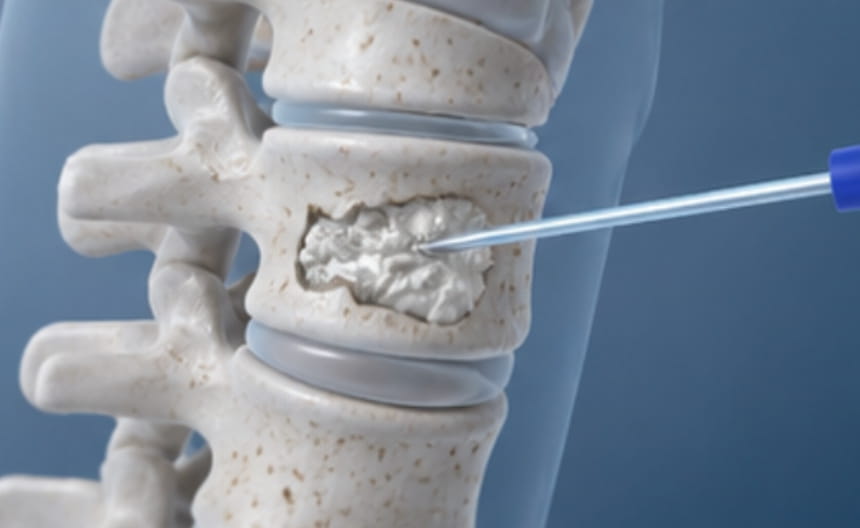
Percutaneous vertebroplasty (PVP), along with percutaneous balloon kyphoplasty (PKP), is a minimally invasive technique in which bone cement is injected into a diseased vertebral body via percutaneous puncture to stabilize microfractures, ablate tumor tissue, and rapidly relieve pain. It is used in vertebral metastases and osteoporotic compression fractures to quickly restore spinal structural support and prevent further vertebral collapse and potential spinal cord compression.
The procedure is performed under fluoroscopic guidance with percutaneous access through the pedicle. Balloon expansion may be performed first to restore collapsed endplates and create a cavity, followed by low-pressure injection of bone cement. The exothermic polymerisation of bone cement can induce local tumour cell damage while simultaneously enhancing vertebral mechanical strength. Postoperative pain is often significantly relieved within 24 hours, allowing for early mobilisation.
· Rapid analgesia with vertebral stabilization: the procedure provides immediate stabilization of the fractured vertebral body, resulting in significant pain relief and helping prevent complications associated with prolonged bed rest.
· Minimally invasive percutaneous approach with rapid recovery: the procedure involves only a small puncture tract and a short operative time, making it well tolerated even in elderly patients or those with poor overall clinical status.
· Tumor inactivation with prevention of vertebral collapse: the combined effects of thermal injury and structural filling provide dual benefits, contributing to tumor cell destruction and partial restoration of vertebral height.
It is a cornerstone approach for maintaining spinal stability and improving quality of life in various conditions, including vertebral metastases, multiple myeloma with vertebral involvement, aggressive vertebral hemangiomas, and painful osteoporotic vertebral compression fractures.