UNI-ASIA Logo WATA Logo
High-Intensity Focused Ultrasound
Applicable Diseases:
Primarily indicated for benign and malignant solid tumours such as uterine fibroids, adenomyosis, bone metastases and fibroadenomas of the breast. It is particularly suitable for patients unsuitable for surgery or those with a strong desire to preserve organ function, and has been extended to palliative debulking of solid tumours such as pancreatic cancer and prostate cancer.

Technical Advantages:
Completely non-invasive, preserving organ structure: No incisions are made on the body surface, normal anatomical layers are maintained, and puncture-related complications are avoided. Real-time imaging monitoring with closed-loop feedback: Changes in ultrasound grey-scale directly reflect the degree of tissue denaturation, allowing for controllable ablation boundaries and outstanding safety. No ionising radiation, suitable for repeated applications: Not subject to cumulative dose limitations, facilitating fractionated treatment or re-intervention following recurrence. Translated with DeepL.com (free version)
Appointment
High-Intensity Focused Ultrasound

High-Intensity Focused Ultrasound (HIFU)

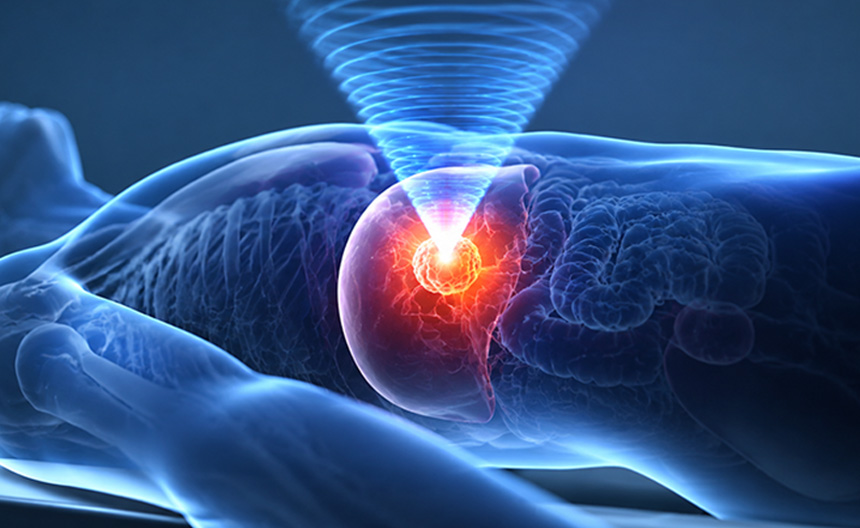
High-Intensity Focused Ultrasound is a non-invasive ablation technique that utilises an external ultrasound transducer to converge multiple beams of low-energy ultrasound waves onto a target site within the body. Through instantaneous high-temperature effects, cavitation effects and mechanical effects, it induces coagulative necrosis in tumour tissue. The procedure requires no puncture or incision; the tissue structure along the ultrasound transmission path remains intact, truly achieving external focusing and precise in-vivo ablation. Intraoperative ultrasound monitoring tracks real-time changes in target area grey-scale, allowing immediate assessment of ablation efficacy, and the treatment can be repeated multiple times.

Technical Features:

Completely non-invasive, preserving organ structure: No incisions are made on the body surface, normal anatomical layers are maintained, and puncture-related complications are avoided.

Real-time imaging monitoring with closed-loop feedback: Changes in ultrasound grey-scale directly reflect the degree of tissue denaturation, allowing for controllable ablation boundaries and outstanding safety.

No ionising radiation, suitable for repeated applications: Not subject to cumulative dose limitations, facilitating fractionated treatment or re-intervention following recurrence.

Indications:

Primarily indicated for benign and malignant solid tumours such as uterine fibroids, adenomyosis, bone metastases and fibroadenomas of the breast. It is particularly suitable for patients unsuitable for surgery or those with a strong desire to preserve organ function, and has been extended to palliative debulking of solid tumours such as pancreatic cancer and prostate cancer.


MDT Team
Bringing together senior experts in China's precision minimally invasive cancer treatment field to provide you with world-leading minimally invasive cancer treatment services.
More Doctors
Patient stories
At UNI-ASIA Cancer Hospital, every journey in search of care is marked by courage and hope, and every story bears witness to doctors and patients working together to overcome disease.
More Cases

Consultation

Consultation Type
Name
Gender
Date of Birth
Nationality
Country of Residence
Phone Number
Email
Your Question
Privacy Policy and Statement