
- Cancers
- Testicular Cancer





Testicular Cancer
Testicular cancer is the most common solid tumor in young men aged 15--35 years, and most cases are germ cell tumors. It is one of the most curable solid tumors, with 5-year survival exceeding 95% in early-stage patients and also reaching more than 80% in advanced disease.
Risk Factors
· Cryptorchidism (the most important risk factor)
· Family history of testicular cancer
· Testicular dysgenesis
· Previous cancer in the contralateral testis
· Ethnic background (higher risk in White populations)
· HIV infection
Etiology
Abnormal testicular descent during embryonic development disrupts the seminiferous tubule microenvironment and promotes development of carcinoma in situ. Isochromosome of the short arm of chromosome 12 (i12p) is a highly characteristic marker. Genetic polymorphisms are also associated with risk.
Symptoms
The most common presentation is a painless unilateral hard testicular lump or diffuse enlargement with a sense of heaviness. A minority of patients have acute pain due to intratumoral hemorrhage. About 10%--15% first present with symptoms of distant metastasis, such as back pain, cough, or a neck mass. Breast enlargement may result from excessive HCG secretion.
Treatment Options
· Surgery: Radical inguinal orchiectomy is the first step in diagnosis and treatment. Retroperitoneal lymph node dissection is performed for stage II non-seminomatous germ cell tumors.
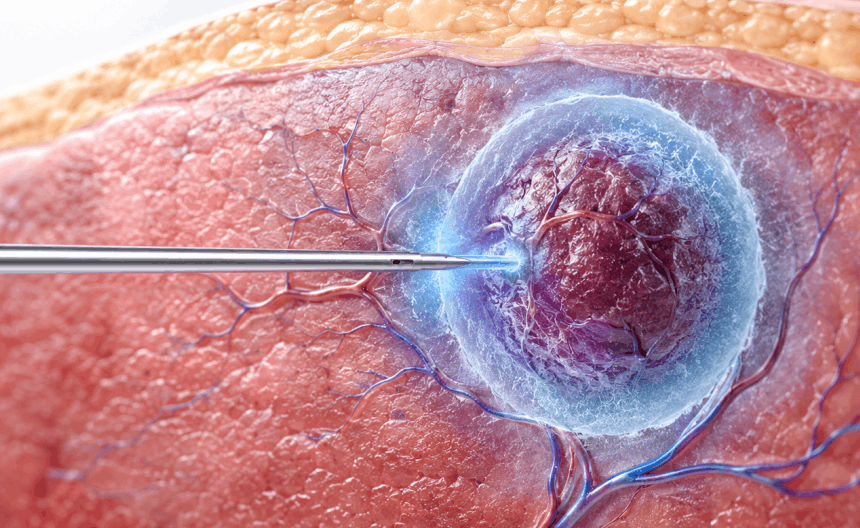
· Minimally invasive treatment: For small residual retroperitoneal lymph nodes or isolated metastases, if repeat surgery is unsuitable, image-guided radiofrequency ablation, microwave ablation, or cryoablation may be considered for local control.
· Chemoradiotherapy: For stage I seminoma, adjuvant radiotherapy or chemotherapy may be selected after surgery; advanced and widely metastatic disease is chemotherapy-based, with a very high cure rate.
· Targeted and immunotherapy: A small number of resistant patients may receive targeted therapy or immune checkpoint inhibitors.
· Others: High-dose chemotherapy combined with stem cell transplantation is used for relapsed and refractory patients; long-term follow-up and endocrine management after treatment are important.
Testing and Diagnosis
Scrotal ultrasound is the most sensitive screening method. Serum tumor markers AFP, β-hCG, and lactate dehydrogenase should be measured both before and after surgery. Contrast-enhanced CT of the chest, abdomen, and pelvis is used for accurate staging and monitoring.