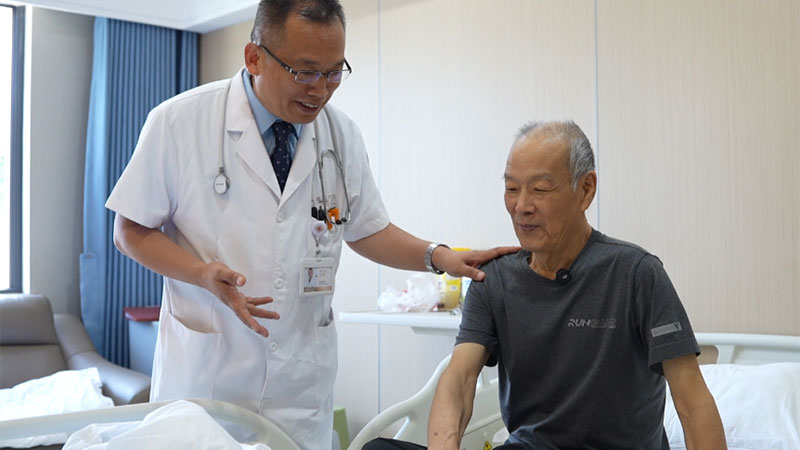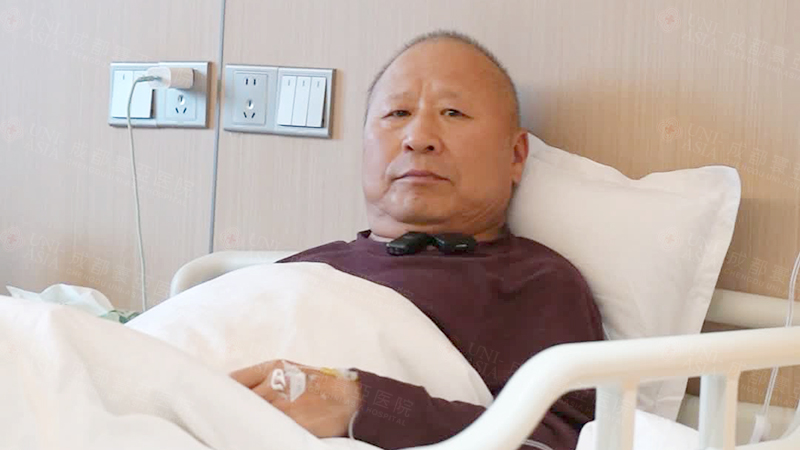

He Weibing | Oncology Expert in Precision Minimally Invasive Cancer Treatment in China
- Doctors
- He Weibing

A Technique at Minus 140 Degrees: Two Decades Dedicated to Preserving Life at Normal Temperature
-- A Conversation with Dr. He Weibing, Head of the International Department of Chengdu Uni-Asia Cancer Hospital and Academic Leader in Cryoablation
More than 20 years devoted to tumor cryoablation, writing a clinical answer sheet for precise, minimally invasive treatment with the argon-helium knife
In the evolution of cryoablation technology, argon-helium knife technology entered China at the beginning of this century. Since then, Dr. He Weibing has stood at the front line of this technology, accumulating experience needle by needle and reviewing cases one by one. He has witnessed the entire process by which cryoablation in China developed from a new technology mastered by only a few people into one of the three major ablation pillars of minimally invasive tumor treatment.
Dr. He Weibing worked for many years at Fuda Cancer Hospital, Guangzhou as one of its founding members. He participated in establishing the Minimally Invasive Tumor Treatment Center and long served as its Executive Deputy Director. Working alongside Professor Niu Lizhi, a renowned expert in the field of international cryoablation therapy, he systematically mastered the theoretical framework and operating standards of cryoablation. He also creatively proposed ten argon-helium cryoablation techniques: adhesive needle, hook needle, field-shaped needle, triangular needle, time-difference needle, well-shaped needle, cross needle, sparse-dense needle, sandwich needle, and cross needle. From Guangzhou to Chengdu, he has remained on the front line of cryoablation for more than two decades. He can be described as one of the physicians in China who has handled the greatest number of cryoablation needles.
In terms of technical focus, cryoablation is his core field. He is also proficient in internal radiotherapy using iodine-125 seed implantation, NanoKnife ablation, and other ablation techniques. He has accumulated extensive clinical experience in minimally invasive treatment of liver, lung, kidney, and pelvic tumors, and is especially skilled in ablation therapy and seed implantation internal radiotherapy for liver and lung malignancies, as well as minimally invasive comprehensive management of liver metastases after colorectal cancer surgery. Since beginning his career, he has performed more than 10,000 minimally invasive interventional procedures as the primary operator, many of which involved difficult anatomical sites regarded by peers as technically challenging and high-risk for cryoablation. He was once reported by Zhiyin, the magazine with the largest circulation in China at the beginning of this century, and by China Central Television, after successfully treating the mother of a PhD scholar studying in the United States.
As a founding member of the Ablation Group of the Professional Committee of Minimally Invasive Treatment of Cancer, China Anti-Cancer Association, Dr. He Weibing has participated in promoting multiple clinical studies and industry technical standards related to cryoablation. In 2023, after three rounds of interventional therapy combined with cryoablation, a liver cancer patient showed a sustained decline in tumor markers and a significant reduction in lesions, changing from "unresectable" to "stably controlled." In his case review, Dr. He wrote: "The progress of medicine is not about pushing patients onto the operating table, but about pulling more patients back from despair." This may be the direction from which he has never deviated throughout more than 30 years of medical practice.
Academic Achievements of Dr. He Weibing
In addition to his clinical work, He Weibing has continuously participated in summarizing the clinical application of cryoablation technology and promoting it academically. According to databases such as the VIP Chinese Journal Platform, he has participated as a core author in the publication of multiple academic papers, some of which are highly influential and rank among the most cited in the field. His research mainly focuses on cryoablation for solid tumors such as liver cancer and lung cancer, sequential treatment strategies combining cryoablation with other modalities, and the prevention and management of cryoablation-related complications.
I. Selected Publications by Dr. He Weibing
1. Niu Lizhi, He Weibing, He Yisong, et al. Clinical analysis of 508 cases of lung cancer treated with argon-helium knife cryotherapy. Chinese Journal of Traffic Medicine, 2006, 20(1): 29-30.
He Weibing was a co-author. This paper is one of the largest domestic case analyses of lung cancer cryoablation. It systematically reported the clinical efficacy and complications of CT- or B ultrasound-guided targeted argon-helium knife cryotherapy in 508 patients with unresectable lung cancer, and remains an important reference widely cited in this field.
2. Niu Lizhi, He Weibing, Guo Ziqian, Zhang Shuping, He Yisong, Zuo Jiansheng, Xu Kecheng. Percutaneous cryoablation for locally advanced non-small cell lung cancer. Paper from Fuda Cancer Hospital, Guangzhou, 2016.
He Weibing was a co-author. The study included 120 patients with non-small cell lung cancer who underwent B ultrasound- or CT-guided percutaneous argon-helium cryoablation and were followed for more than 2 years. After treatment, symptom improvement rates were 78.5% for chest pain, 79.2% for hemoptysis, 69.1% for cough, and 72.0% for dyspnea. At 3 months, the complete response rate was 25.5% and the partial response rate was 41.8%. Survival rates were 64% at 6 months, 55% at 12 months, and 36% at 24 months. The conclusion confirmed that this technique provides definite value in symptom relief and tumor control for inoperable locally advanced non-small cell lung cancer.
3. Xu Kecheng, Niu Lizhi, Zhou Qiang, He Weibing, Guo Ziqian, Zuo Jiansheng. Sequential treatment with chemoembolization, cryoablation, and alcohol injection for 51 cases of unresectable hepatocellular carcinoma. Paper from Fuda Cancer Hospital, Guangzhou, 2014.
He Weibing was a co-author. Fifty-one patients with unresectable hepatocellular carcinoma received a three-step sequential treatment of transarterial chemoembolization, cryoablation, and percutaneous alcohol injection. Among 48 patients followed for 6 to 20 months, 81.2% showed shrinkage of intrahepatic tumors, and 85.3% of those with elevated AFP showed a decline in AFP. Survival rates were 89.6% at 6 months, 80.0% at 1 year, and 66.6% at 18 months. The study showed that sequential application of the three modalities can create a synergistic effect and provide a safe and effective comprehensive pathway for complex liver cancer.
4. Niu Lizhi, Xu Kecheng, Ye Yukun, Hu Yize, He Weibing, He Yisong, Hong Haizhen, Li Yanhong. Complications and management in 1,806 cases of tumor ablation with the American argon-helium knife. Proceedings of the First China Symposium on Minimally Invasive Tumor Treatment and the Founding Conference of the Professional Committee of Minimally Invasive Treatment of Cancer, China Anti-Cancer Association.
He Weibing was a co-author. This report is one of the largest domestic studies of complications in cryoablation. It systematically summarized the complication spectrum and management strategies in 1,806 cases of percutaneous cryoablation, providing a landmark reference for safety evaluation and standardized promotion of the technology.
5. Xu Kecheng, Niu Lizhi, He Weibing, Guo Ziqian, Zuo Jiansheng. Percutaneous ablation therapy for liver cancer. Proceedings of the 16th National Academic Symposium on Digestive Diseases of the Chinese Association of Integrative Medicine.
He Weibing was a co-author. When liver cancer is clearly diagnosed, most patients are no longer suitable for surgical resection. In recent years, several percutaneous ablation therapies that attempt to replace surgery have emerged. These methods share common features: they are minimally invasive; for small tumors, they can achieve radical treatment comparable to surgery; for large or multiple tumors, they can reduce tumor burden, create conditions for further comprehensive treatment, and improve quality of life and survival.
6. Xu Kecheng, Niu Lizhi, Hu Yize, He Weibing, He Yisong, Zuo Jianniu. Cryotherapy plus radioactive iodine seed implantation for locally advanced pancreatic cancer. Chinese Journal of Pancreatology. 2008:4 (9-12).
He Weibing was a co-author. This study explored the therapeutic value of intraoperative or percutaneous cryotherapy combined with 125I seed implantation for locally advanced pancreatic cancer. Methods: Thirty-eight patients with locally advanced pancreatic cancer who were considered unsuitable for surgical resection after comprehensive evaluation were treated with intraoperative or percutaneous cryotherapy plus 125I seed implantation. 125I seed implantation was performed under direct surgical vision or by percutaneous puncture under ultrasound or CT guidance. Eight patients had received 4 to 6 cycles of chemotherapy before admission. CT was performed 3 months after treatment to evaluate tumor response. Results: Eleven patients received intraoperative cryotherapy and 27 received percutaneous cryotherapy; among them, 14 received cryotherapy twice and 3 received it three times. Twenty-nine patients underwent intratumoral 125I seed implantation at the time of cryotherapy, and 9 underwent 125I seed implantation after surgery under ultrasound or CT guidance. Fifteen patients, including 13 with peripancreatic lymph node or liver metastases, received regional arterial chemotherapy. CR, PR, SD, and PD were observed in 9, 16, 10, and 3 cases, respectively. Twenty patients (52.6%) experienced upper abdominal pain, 16 (42.1%) had elevated serum amylase, and 5 (13.2%) developed AP, including 1 case of SAP; all recovered with conservative treatment. There were no treatment-related deaths. During follow-up of 5 to 37 months, the median survival was 12 months, and overall survival rates at 6, 12, 24, and 36 months were 94.7%, 49.4%, 21.8%, and 5.4%, respectively. For patients who received chemotherapy, the 6-, 12-, 24-, and 36-month survival rates were 93.3%, 26.6%, 0, and 0; for those who did not receive chemotherapy, the rates were 95.6%, 65.9%, 19.8%, and 9.9%. The difference between the two groups was significant (P < 0.01). The two longest-surviving patients survived 31 and 37 months, respectively, and currently showed no evidence of recurrence. Twenty-nine patients died, including 15 within 12 months. Conclusion: For most patients with pancreatic cancer, especially those with unresectable disease, cryotherapy has good efficacy and a relatively low incidence of adverse reactions. Adding 125I seed implantation during or after cryotherapy has a complementary effect with cryotherapy.
7. Guo Ziqian, Niu Lizhi, He Yisong, He Weibing, Xu Kecheng. Permanent 125I seed implantation brachytherapy for advanced bladder cancer. Traffic Medicine. 2007:2 (262-263).
He Weibing was a co-author. This study explored the value and efficacy of I-125 radioactive seed implantation for bladder cancer and opened a new minimally invasive treatment pathway for bladder cancer. Methods: Six patients with advanced bladder cancer underwent implantation of I-125 radioactive seeds into the tumor under B ultrasound guidance. Results: Symptoms were relieved in all patients, tumors were significantly reduced after 2 months, and no recurrence or severe complications were observed at 1-year follow-up. Conclusion: I-125 radioactive seed therapy for bladder cancer can not only improve symptoms and rapidly shrink tumors in the short term, but also continuously kill residual tumor cells and help prevent recurrence.
8. Xu Kecheng, Niu Lizhi, Guo Ziqian, He Weibing, Zuo Jiansheng. Combined photodynamic therapy and percutaneous argon-helium knife cryoablation for non-small cell obstructive lung cancer. Proceedings of the First International Conference on Targeted Cancer Therapy.
He Weibing was a co-author. Non-small cell obstructive lung cancer occurring in the trachea or main bronchus has very limited opportunity for surgical resection. Most patients develop complications such as atelectasis, infection, and obstructive pneumonia within a short period, leading to disability and death. A hospital combined photodynamic therapy with percutaneous argon-helium system cryoablation to treat 41 cases of unresectable non-small cell obstructive lung cancer, achieving good short-term results.
9. Guo Ziqian, Niu Lizhi, He Weibing, Deng Chunjuan. Photodynamic therapy for tongue cancer: report of 20 cases. Chinese Journal of Laser Medicine. 2007:4 (296-298, 340).
He Weibing was a co-author. This study explored the efficacy of photodynamic therapy for tongue cancer. Methods: Twenty patients with tongue cancer received intravenous hematoporphyrin, followed by laser irradiation on the tumor surface and inside the tumor at 24, 48, and 72 h. Evaluation was based on tumor shrinkage and symptom relief observed by visual inspection and CT after treatment. Results: All patients had symptom relief and tumor shrinkage; CR occurred in 4 cases, SR in 12 cases, and MR in 4 cases. Two patients developed darkening of exposed skin, with no other severe complications. Conclusion: Photodynamic therapy can effectively relieve symptoms and shrink tumors in tongue cancer, while preserving tongue appearance and function. It is safe, has few adverse reactions, and can significantly improve quality of life.
10. Guo Ziqian, Niu Lizhi, He Weibing, Zuo Jiansheng, Xu Kecheng. Photodynamic therapy combined with percutaneous argon-helium system cryoablation for non-small cell obstructive lung cancer. Chinese Journal of Traffic Medicine. 2006:3 (31-32, 34).
He Weibing was a co-author. This study investigated the therapeutic value of combined photodynamic therapy and percutaneous argon-helium system cryoablation for unresectable non-small cell obstructive lung cancer. Methods: Forty-one patients with non-small cell obstructive lung cancer considered unresectable because of local tumor progression (TNM stage IIIb) or poor pulmonary function (severe obstructive pulmonary disease) first received intravenous photosensitizer Photofrin 2 mg/kg or hematoporphyrin 5 mg/kg, followed by 630 nm red laser irradiation via bronchoscopy at 48 and 72 hours. Percutaneous cryoablation with the argon-helium system was then performed under B ultrasound or CT guidance. Efficacy was assessed by symptoms, tumor size, and survival. Results: After treatment, 37 patients (90.2%) had subjective symptom improvement, symptom scores decreased significantly, and dyspnea improved most prominently. Bronchoscopy showed that endobronchial tumors in all patients were ablated to varying degrees, with complete disappearance in 17 cases (41.5%). CT review showed CR in 14 lung tumors (34.1%) and PR in 17 (41.5%). On X-ray films, among 27 cases with pre-existing atelectasis, atelectasis completely disappeared in 8 (29.6%) and improved in 19 (70.4%). Six-month and 1-year survival rates reached 43.9% and 70.7%, respectively. No serious adverse reactions occurred with either photodynamic therapy or percutaneous argon-helium system cryoablation. Conclusion: Combined photodynamic therapy and percutaneous argon-helium system cryoablation can eliminate lesions inside and outside the bronchus, respectively. The two methods complement each other and can improve the treatment effect for unresectable non-small cell obstructive lung cancer.
11. Xu Kecheng, Niu Lizhi, Hu Yize, He Weibing, He Yisong, Zuo Jiansheng. Cryotherapy and iodine seed implantation for locally advanced pancreatic cancer. Proceedings of the Third China Academic Conference on Minimally Invasive Tumor Treatment, the Founding Conference of the Seed Therapy Branch of the Professional Committee of Minimally Invasive Treatment of Cancer of the China Anti-Cancer Association, and the Seventh National Academic Conference on Interstitial Radioactive Seed Brachytherapy for Tumors.
He Weibing was a co-author. This study explored the therapeutic value of intraoperative or percutaneous cryotherapy combined with <125> iodine seed implantation for locally advanced pancreatic cancer. Methods: Thirty-eight patients with locally advanced pancreatic cancer, including 28 males and 10 females with a median age of 57 years, were enrolled. Tumor size, measured by maximum diameter, ranged from 2.2 to 7.1 cm; 10 cases had peripancreatic lymph node metastasis and 8 had liver metastasis. Diagnosis was based on ultrasound, CT, and/or MRI data, and 31 cases were confirmed histologically. Eight patients had received 4 to 6 cycles of chemotherapy before admission. All tumors were considered unsuitable for surgical resection after comprehensive evaluation. Treatment consisted of intraoperative or percutaneous cryotherapy plus <125> iodine seed implantation; the latter was performed under direct surgical vision or by percutaneous puncture under ultrasound or CT guidance. Results: Eleven patients received intraoperative cryotherapy and 27 received percutaneous cryotherapy. Among those receiving percutaneous cryotherapy, 14 received a second cryotherapy procedure and 3 received a third. Twenty-nine patients underwent intratumoral <125> iodine seed implantation at the time of cryotherapy, and 9 underwent <125> iodine seed implantation after surgery under ultrasound or CT guidance. Fifteen patients, including 13 with peripancreatic lymph node or liver metastases, received regional arterial chemotherapy. CT was performed in the third month after treatment to evaluate tumor response. Most tumors showed varying degrees of necrosis. Complete response (CR), partial response (PR), stable disease (SD), and progressive disease (PD) were 23.6%, 42.1%, 26.3%, and 7.9%, respectively. Adverse reactions were mainly upper abdominal pain and elevated serum amylase; 5 patients (13.2%) developed acute pancreatitis, including 1 hemorrhagic necrotizing case, and all recovered with conservative treatment. No treatment-related deaths occurred. All cases received a median follow-up of 16 months (5 to 37 months). Results showed a median survival of 12 months, with 20 patients (52.63%) surviving 1 year or longer. Overall survival rates at 6, 12, 24, and 36 months were 94.7%, 49.4%, 21.8%, and 5.4%, respectively. For patients who received chemotherapy, survival rates at 6, 12, 24, and 36 months were 93.3%, 26.6%, 0%, and 0%; for those who did not receive chemotherapy, the corresponding rates were 95.6%, 65.9%, 19.8%, and 9.9%. Twenty-nine patients died; among the 15 who died within 12 months, 8 already had liver metastasis or peripancreatic lymph node metastasis at the time of treatment. Four patients survived 24 months or longer: two survived 24 months, and one each survived 31 and 37 months. The longest-surviving patient currently had no evidence of recurrence. Conclusion: For most patients with pancreatic cancer, especially unresectable cases, cryotherapy has good efficacy and a relatively low incidence of adverse reactions, and may potentially replace conventional surgery. Adding <125> iodine seed implantation during or after cryotherapy complements cryotherapy.
12. Xu Kecheng, Niu Lizhi, He Weibing, Guo Ziqian, Zuo Jiansheng, Hu Yize. Sequential treatment with chemoembolization and percutaneous cryoablation for unresectable primary liver cancer. Proceedings of the 2006 Guangdong Academic Conference on Digestive Diseases in Traditional Chinese Medicine and Integrative Medicine and the National Continuing Education Program on Advances in Digestive Diseases.
He Weibing was a co-author. This paper discussed sequential treatment with chemoembolization and percutaneous cryoablation for unresectable primary liver cancer. The paper proposed that chemoembolization reduces the tumor mass of PLC and occludes blood vessels, making cryoablation easier to perform and reducing bleeding complications. Cryoablation can eliminate viable tumor tissue remaining after chemoembolization, thereby functioning as a radical "resection" and compensating for the inability of chemoembolization to cure liver cancer. Sequential application of chemoembolization and cryoablation has a complementary role in the treatment of liver cancer.
13. Xu Kecheng, He Weibing, Guo Ziqian, Guo Dehong, Bai Haichu, He Yisong. Several latest treatments for digestive system tumors. Proceedings of the 2006 Guangdong Academic Conference on Digestive Diseases in Traditional Chinese Medicine and Integrative Medicine and the National Continuing Education Program on Advances in Digestive Diseases.
He Weibing was the second author. This paper introduced several latest treatments for digestive system tumors, discussing percutaneous ablation therapy, photodynamic therapy, 125 iodine seed implantation therapy, dendritic cell vaccine therapy, and other approaches.
14. Niu Lizhi, He Weibing, Xu Kecheng, Hu Yize, He Yisong, Hong Haizhen, Li Yanhong. Argon-helium knife cryoablation for 2,500 tumor cases in the United States. Proceedings of the First International Conference on Targeted Cancer Therapy.
He Weibing was the second author. Argon-helium cryoablation for unresectable solid tumors has gradually been developed. The authors summarized complications and management experience from 2,500 cases of argon-helium knife cryoablation for tumors performed at their hospital between March 2001 and June 2006. Through the application of the argon-helium knife in 2,500 solid tumor cases, they concluded that it is a highly effective, simple, and relatively safe treatment method.
15. Niu Lizhi, He Weibing, Guo Ziqian, Hong Haizhen, Zuo Jiansheng, Xu Kecheng. Cryoablation for malignant soft tissue tumors: follow-up results of 36 cases. Proceedings of the First International Conference on Targeted Cancer Therapy.
He Weibing was the second author. Soft tissue tumors may be primary, such as sarcomas arising from fibrous tissue, smooth muscle, diaphragm, or cartilage, or secondary, often metastatic from primary carcinomas or sarcomas of certain organs or tissues. Surgical resection is the primary treatment; however, many tumors cannot be appropriately treated because of difficult anatomical locations or because patients are in poor general condition and cannot tolerate surgery. The authors applied the argon-helium ablation system to treat 36 cases of malignant soft tissue tumors and achieved good results.
16. He Weibing, Niu Lizhi, Guo Ziqian, Xu Kecheng. Transabdominal interventional cryoablation for uterine fibroids: preliminary observations. Advances in Targeted Cancer Therapy Technology in China.
He Weibing was the first author. This study explored the feasibility of transabdominal interventional argon-helium knife cryoablation from the United States as a treatment for uterine fibroids. Methods: Fourteen patients with uterine fibroids were diagnosed based on ultrasound and/or CT imaging and confirmed by percutaneous biopsy. Cryoablation was performed using the American Cryocare argon-helium knife surgical system. Under ultrasound guidance, a probe was inserted percutaneously through the abdomen into the tumor. Results: After treatment, most symptoms improved; uterine bleeding stopped in all 13 relevant cases within 1 year after treatment. Most tumors shrank significantly, and biopsy confirmed that residual masses were scar tissue. Conclusion: Transabdominal interventional argon-helium knife cryoablation is a simple and safe treatment method for uterine fibroids.
II. Participation in Books and Technical Inheritance
- In 2008 and 2010, he was invited to serve as an editorial board member for the books Argon-Helium Knife Monograph: Tumor Cryotherapy and Argon-Helium Knife Tumor Ablation Treatment Technology.
- Since 2001, at the invitation of major international cryotherapy equipment manufacturers, including Varian and Boston Scientific, he has participated in training Chinese physicians to master argon-helium knife ablation technology. His trainees are now spread across dozens of tertiary Grade-A hospitals.