


*When it seems there are no options left… there is always another hope*
Some patients do not come to Uni-Asia Hospital as soon as their condition is diagnosed.
They have been through a very long journey.
They have had surgery.
They have had chemotherapy.
They have had radiotherapy.
They have had immunotherapy.
They have placed their full trust in the most modern treatments.
But the disease has continued to progress.
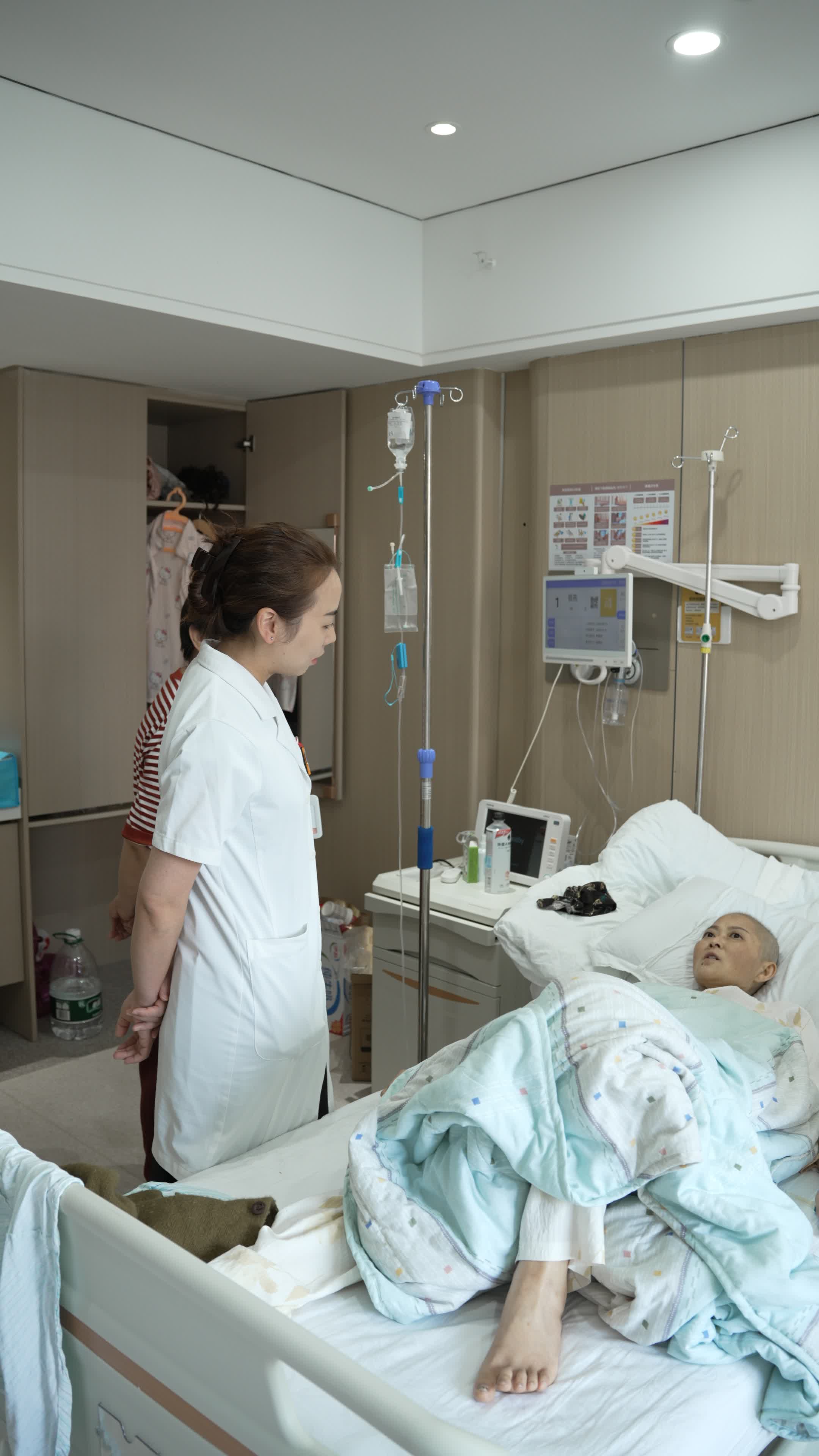
This is also the story of a 38-year-old woman.
A few months ago, she was diagnosed with lung cancer and underwent surgery to remove the tumour. The whole family hoped that, following the operation, things would gradually improve.
However, at her subsequent follow-up appointment, the test results brought news that no one had wanted to hear.
The tumour had metastasised to the *caudate lobe* – a location deep within the liver, close to major blood vessels and considered one of the most difficult sites to treat.
She went on to undergo courses of chemotherapy, radiotherapy and immunotherapy in the hope of bringing the disease under control.
But as time passed, the disease continued to progress.
The tumour did not shrink as expected.
Due to the specific location of the lesion, the surgeons assessed the surgical risk as very high and deemed resection no longer feasible.
What exhausted her most was not just the test results.
It was the increasingly severe pain.
It was the constant nausea and vomiting that made it almost impossible for her to eat or drink normally.
Every day that passed became a struggle.
At a time when they were at a loss as to where to turn, her family researched and took her to *Uni-Asia Hospital* to have her condition fully reassessed by a team of specialists.
There, her medical records, CT and MRI scans, and previous treatment results were carefully reviewed by a panel of specialists. With their experience in treating complex cancer cases using minimally invasive techniques, the doctors realised that, although surgery was no longer an option, the patient could still be considered for an alternative treatment plan.
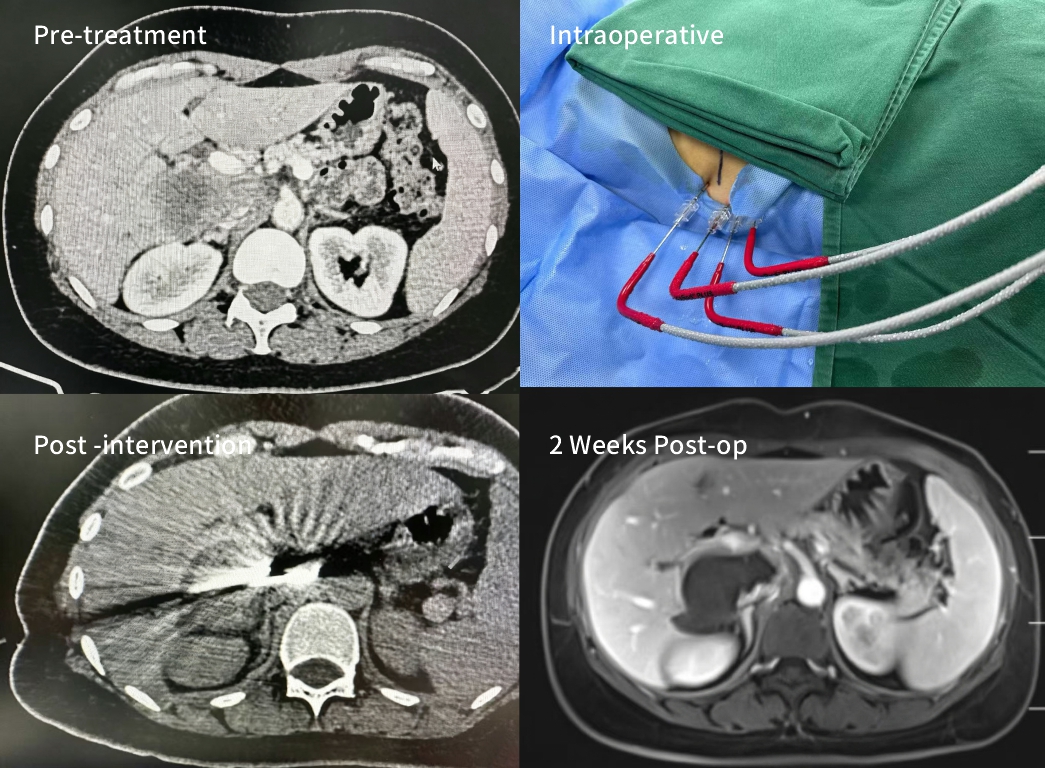
Following a thorough consultation, the team decided to carry out *multi-needle cryoablation*.
Guided by a state-of-the-art imaging system, the treatment needles were precisely inserted into the tumour.
Extremely low temperatures were generated to form an ‘ice sphere’, enveloping the entire lesion, with the aim of destroying the tumour cells in situ whilst minimising damage to the surrounding healthy liver tissue.
The procedure went smoothly.
No bleeding or significant complications were observed during the treatment.
Two weeks later, the patient underwent an MRI scan to assess the results.
The images showed that the tumour area had *completely necrotised following the procedure*.
More importantly, the pain that had previously caused her to lose sleep for many nights had significantly subsided.
The vomiting symptoms were also no longer as severe as before.
She was able to eat and drink better and carry out her daily activities more easily.
For the patient and her family, the most valuable aspect lies not only in the images on the scan, but also in the patient having a greater opportunity to improve her quality of life and continue her treatment journey with a more positive outlook.
According to specialists at *Uni-Asia Hospital*, the caudate lobe of the liver has always been one of the most challenging areas for surgeons to treat due to its deep location, proximity to major blood vessels and complex anatomical structure.
However, with the advancement of interventional medicine, in cases deemed suitable, minimally invasive techniques such as tumour cryotherapy can be a viable option, offering the advantages of minimising damage to healthy tissue, reducing post-procedure pain and ensuring a relatively quick recovery time.
To make treatment decisions for such challenging cases, Uni-Asia Hospital brings together a team of experienced specialists in the fields of oncology and interventional medicine, notably:
* *Professor Liao Zhengyin (廖正银)* – a leading expert in oncology with many years’ experience in treating complex cancers.
* *Professor Zhang Jinshan (张金山)* – one of China’s pioneering experts in interventional radiology, with extensive experience in treating difficult tumours.
* *Professor Xiao Yueyong (肖越勇)* – a renowned expert in interventional therapy and minimally invasive techniques, having treated numerous cases of advanced-stage cancer.
The collaboration between specialists from various disciplines ensures that each patient receives a personalised treatment plan, based on the tumour’s location, the stage of the disease, the patient’s general health and their individual treatment goals.
For cancer patients, the exhaustion of one treatment option does not necessarily mean all hope is lost.
Sometimes, the most important thing is to be re-evaluated by a team of experienced specialists, in order to identify suitable treatment options that may not have been previously considered.