

- News
- Breaking New Ground in High-Risk Liver Cancer Treatment: Chengdu Uni-Asia Cancer Hospital Performs Southwest China's First Vinna Knife Ablation Under Local Anesthesia





Breaking New Ground in High-Risk Liver Cancer Treatment: Chengdu Uni-Asia Cancer Hospital Performs Southwest China's First Vinna Knife Ablation Under Local Anesthesia
On July 23, Professor Liao Zhengyin's team at Chengdu Uni-Asia Cancer Hospital successfully performed Southwest China's first Vinna Knife liver tumor ablation under local anesthesia. The procedure tackled several medical challenges and created a new treatment choice for patients with serious liver problems and high-risk tumors in the hepatic caudate lobe.
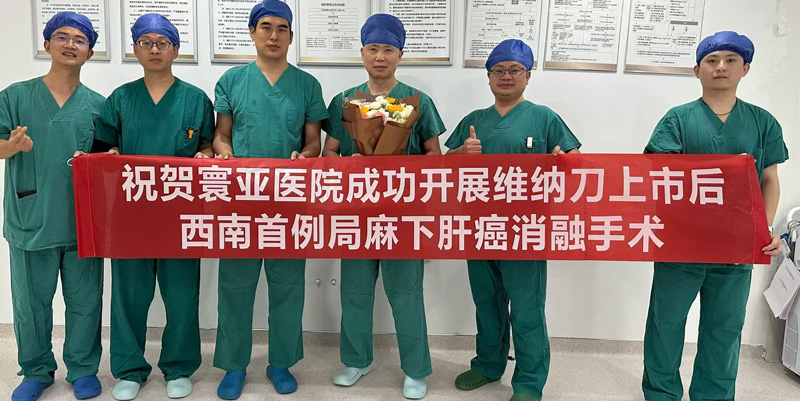
This milestone highlights Chengdu Uni-Asia Cancer Hospital's leadership in advanced minimally invasive oncology and marks the beginning of a new era of local-anesthesia pulse ablation for complex liver cancer treatment in Southwest China. More importantly, it offers new hope to patients who were previously considered unsuitable for surgery or other local therapies.
Multiple High-Risk Factors Combined: An "Impossible Mission"
This case represented one of the most technically demanding challenges in liver cancer treatment.
The tumor was located in the hepatic caudate lobe, an anatomically complex region situated deep in the posterior central liver and surrounded by critical structures, including the inferior vena cava, duodenum, colon, and major blood vessels. Because of its location, the caudate lobe has long been regarded as one of the most difficult and high-risk areas for tumor ablation.
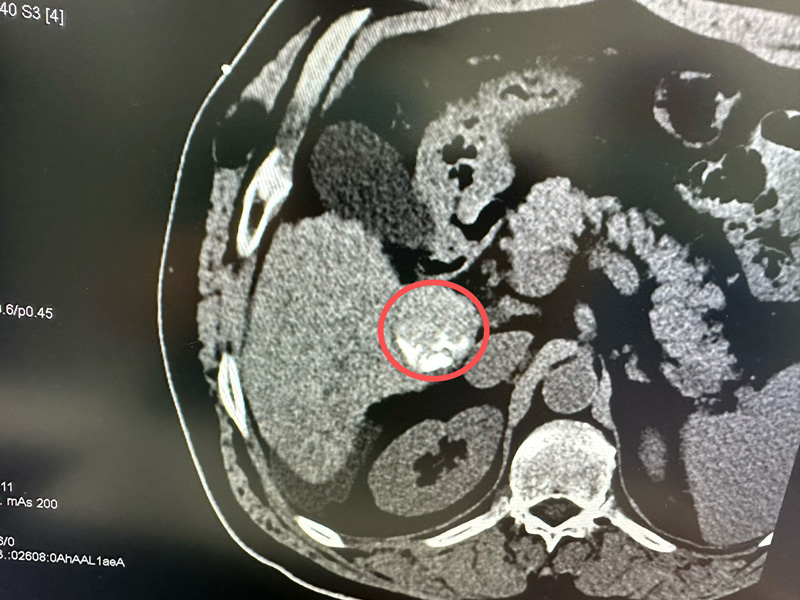
△ Preoperative CT imaging
Compounding the challenge, the patient had Child-Pugh Class C liver function, indicating severely impaired hepatic reserve.
Conventional open surgery would have involved substantial surgical trauma and extremely high anesthetic risk. Thermal ablation techniques such as radiofrequency ablation (RFA) and microwave ablation (MWA) are vulnerable to the heat sink effect and carry a significant risk of damaging adjacent bowels and major blood vessels, potentially leading to life-threatening complications including massive hemorrhage and intestinal perforation.
Meanwhile, conventional irreversible electroporation (IRE) requires general anesthesia together with neuromuscular blockade, placing an additional burden on patients with severely compromised liver function.
As a result, virtually all conventional treatment options were considered unsuitable, leaving the patient with no effective local therapy.
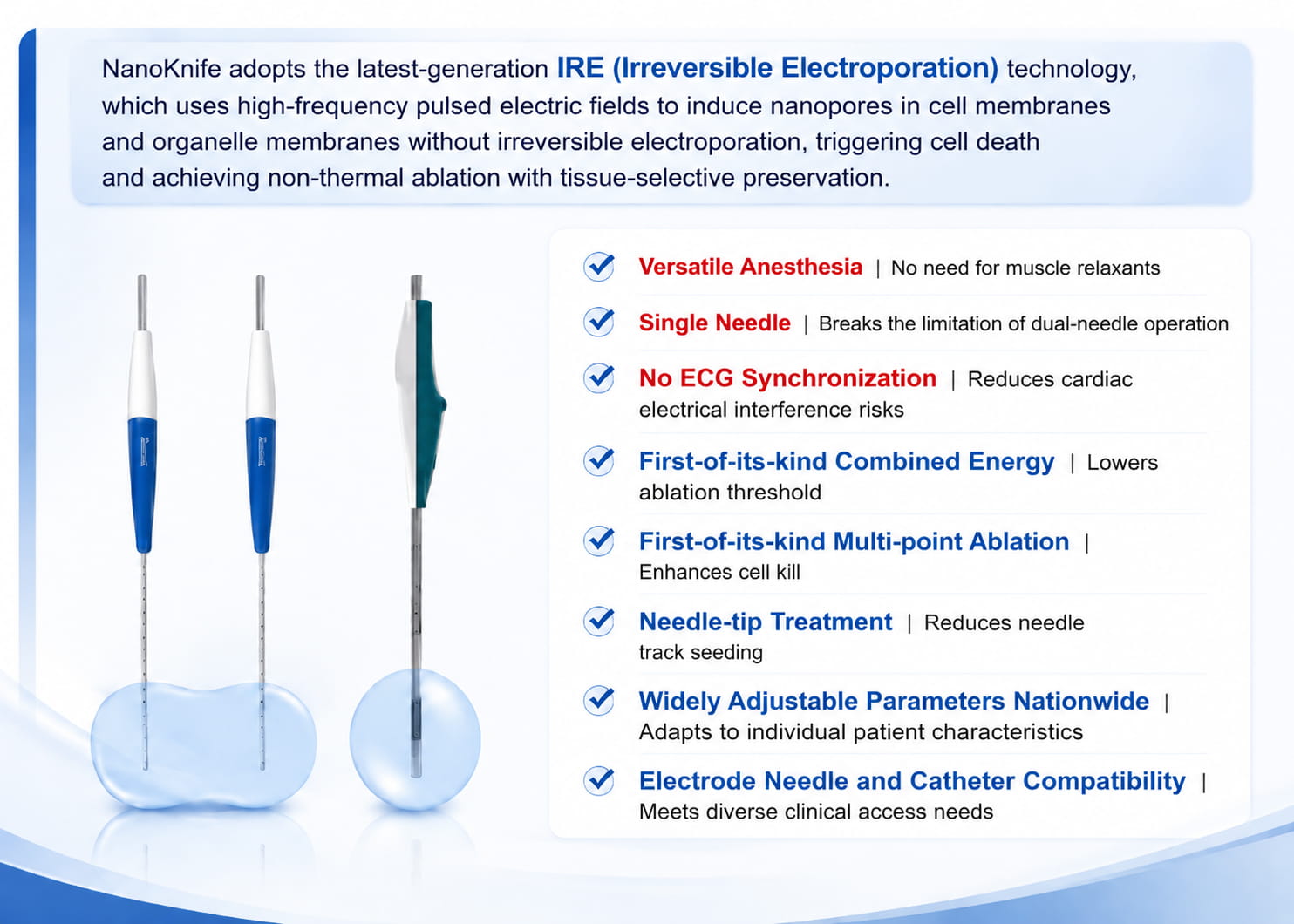
The Vinna Knife changed that.
Its non-thermal, tissue-selective pulsed electric field technology precisely targets tumor cells while preserving surrounding vital structures, including the duodenum, inferior vena cava, and colon—making what once seemed impossible clinically achievable.
Southwest China's First Case Expands the Boundaries of Advanced Liver Cancer Treatment
next-generation broadband synergistic irreversible electroporation (IRE) system. It uses high-voltage pulsed electric fields to permanently disrupt tumor cell membranes, inducing apoptosis while preserving the structural integrity of blood vessels, bile ducts, nerves, and the intestinal wall.
Its most significant advantage over conventional pulse ablation lies in its ability to be performed under local anesthesia, eliminating the need for general anesthesia or muscle relaxants and substantially reducing anesthetic-related risks for patients with advanced cirrhosis.
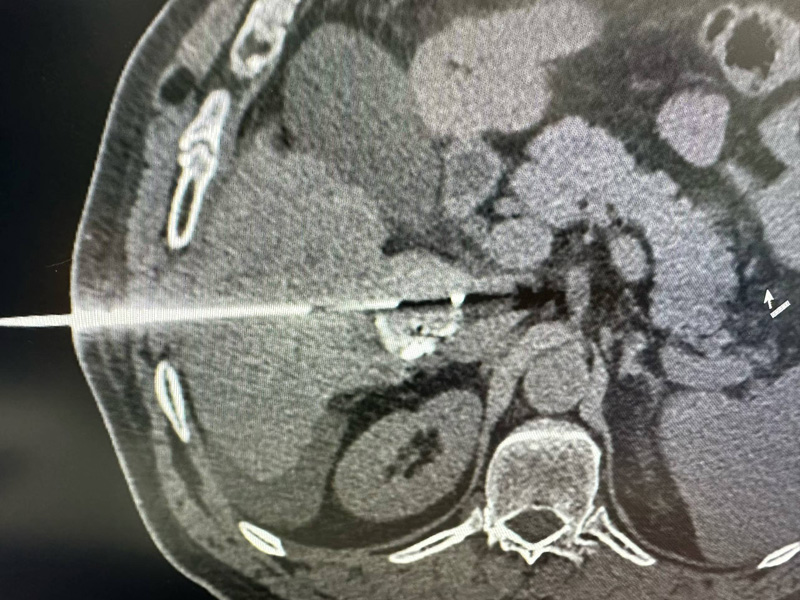
△ Intraoperative electrode placement
Throughout the procedure, the patient remained awake and experienced no significant pain or discomfort.
Drawing on more than 30 years of experience in complex image-guided interventions, Professor Liao Zhengyin meticulously planned the puncture trajectory, safely navigated around the bowel and major blood vessels, and accurately positioned the ablation electrodes within the caudate lobe tumor to complete the procedure successfully.
Immediate postoperative imaging confirmed complete tumor coverage with an adequate safety margin and no evidence of vascular or gastrointestinal injury.
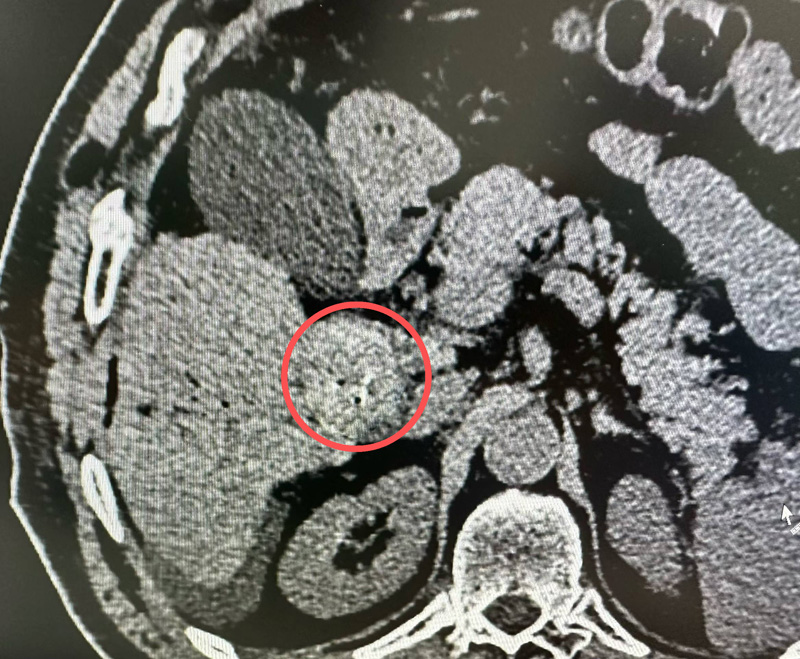
△ Postoperative CT imaging
Clinical Significance
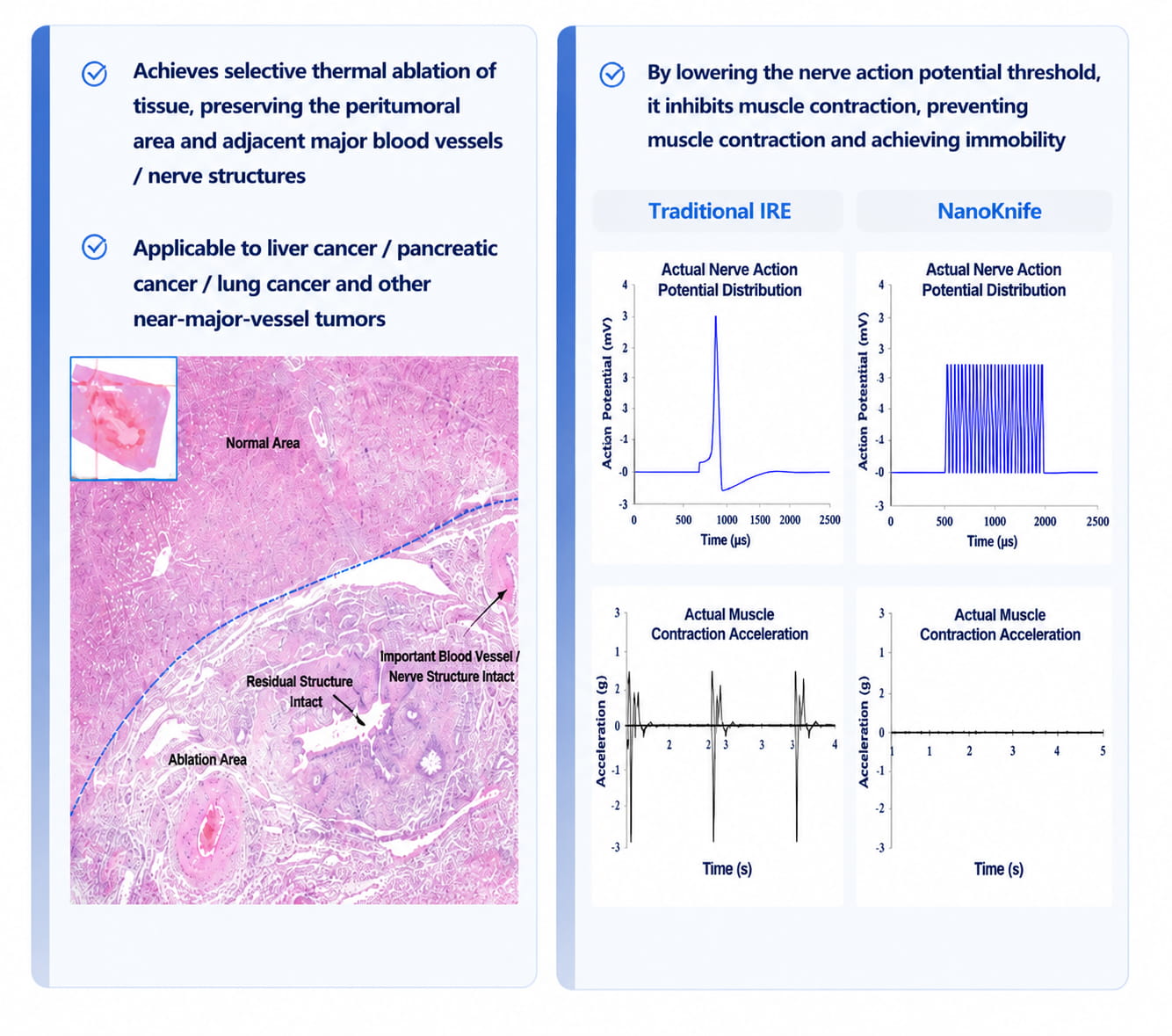
The successful completion of this procedure carries important clinical implications.
First, it demonstrates the feasibility of Vinna Knife technology in one of the most challenging clinical scenarios—patients with Child-Pugh Class C liver function and tumors in the hepatic caudate lobe, a population for whom almost all conventional treatment options are unsuitable.
Second, it represents a major advancement from general-anesthesia ablation to local-anesthesia minimally invasive therapy, significantly lowering treatment risks for elderly patients and those with advanced cirrhosis or multiple comorbidities while expanding access to potentially life-extending treatment.
Previously, the world's first liver cancer ablation under local anesthesia using a micronano knife was completed at Beijing Tsinghua Changgung Hospital in 2023. With this breakthrough, Chengdu Huanya Hospital has successfully introduced the technology to Southwest China, placing the hospital among the country's leading centers for advanced tumor ablation.
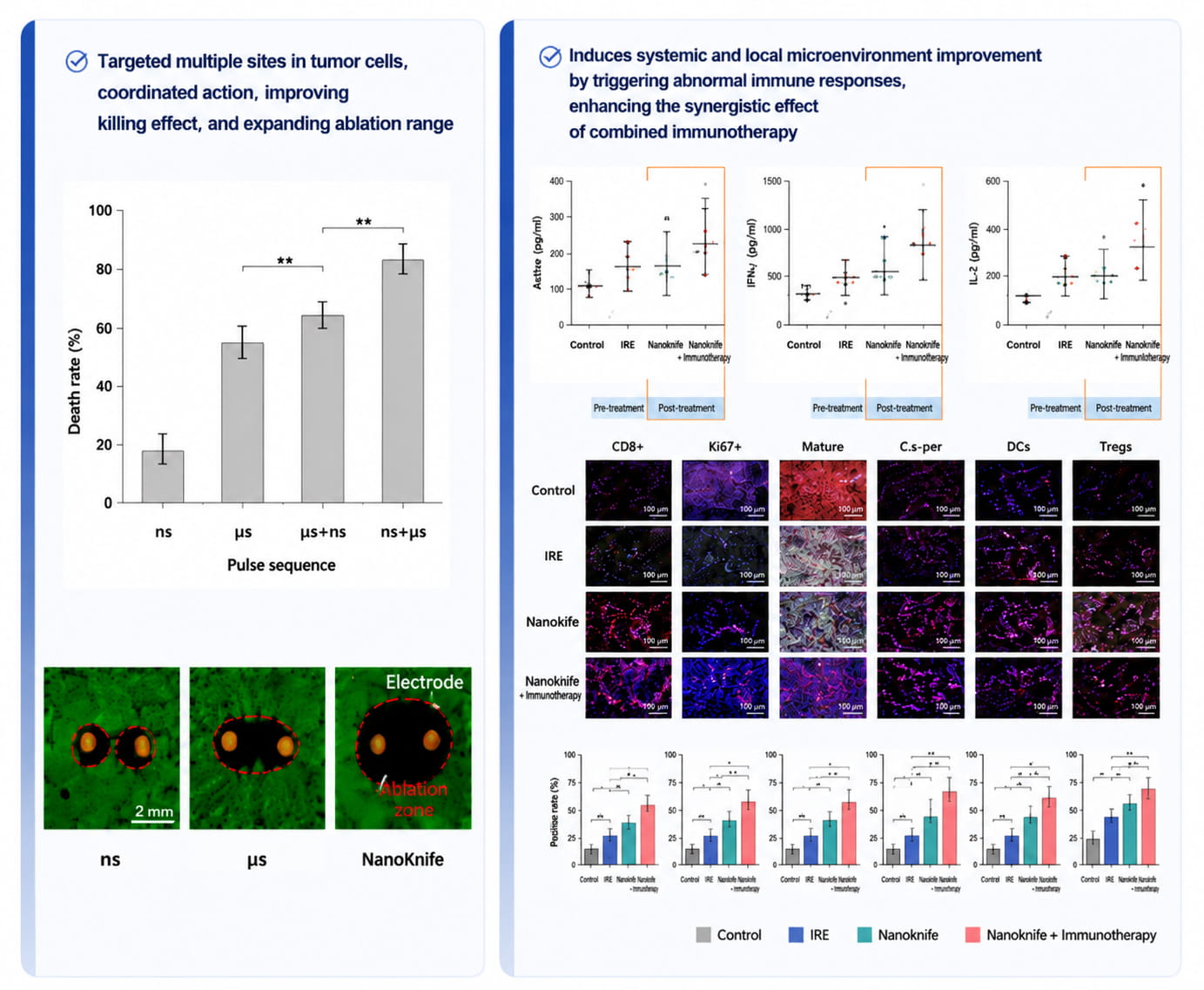
This achievement is built on strong clinical expertise, further establishing Chengdu Uni-Asia Cancer Hospital as a hub for minimally invasive oncology in Southwest China.
The success of this landmark procedure was no coincidence. It reflects Chengdu Uni-Asia Cancer Hospital's comprehensive clinical capabilities and its long-standing commitment to advancing oncology through technological innovation.
The hospital has assembled a multidisciplinary team led by some of China's foremost experts in interventional oncology, including:
Professor Liao Zhengyin, a nationally recognized leader in multidisciplinary management of complex tumors;
Professor Zhang Jinshan, one of the pioneers of interventional oncology in China;
Professor Xiao Yueyong, a key contributor to China's national standards for tumor ablation.

Supported by this expert team, the hospital offers a comprehensive portfolio of advanced minimally invasive cancer therapies, including NanoKnife (IRE), Vinna Knife, argon-helium cryoablation, iodine-125 seed implantation, TACE, and other interventional techniques. The team has particular expertise in treating tumors located in traditionally challenging anatomical regions, such as the hepatic caudate lobe, hepatic hilum, and pancreas.
By becoming the first hospital in Southwest China to introduce this cutting-edge technology, Chengdu Uni-Asia Cancer Hospital is not only expanding treatment options for patients once considered untreatable but also delivering renewed hope through safer, more precise, and less invasive care.
Looking ahead, the hospital will continue to promote the clinical adoption and standardized application of next-generation ablation technologies. With the help of its top-notch team, Chengdu Uni-Asia Cancer Hospital is dedicated to providing tailored, less invasive cancer treatments that help patients with serious cancers live longer and have a better quality of life, while also helping to improve cancer care in Southwest China.