
- Treatments
- WKnife





The World’s First Local Anaesthesia Single-Needle Synergistic Steep-Pulse Ablation System
— An Original Breakthrough from Irreversible Electroporation to Broadband Synergistic Pulses
I. Introduction: A Paradigm Shift in Tumour Ablation
In May 2026, the VenaKnife (Broadband Synergistic Steep-Pulse Therapy Device and Single-Use Steep-Pulse Ablation Electrode Needle) officially received registration approval from the National Medical Products Administration (NMPA). As the world’s first synergistic steep-pulse ablation system, the VenaKnife is also the first device capable of performing treatments under local anaesthesia using a single local anaesthetic needle and a bipolar catheter. Furthermore, it is the world’s first NanoKnife device to combine ‘single-needle ablation with local anaesthesia’ whilst holding dual indications for both the liver and pancreas— —a number of world-first technologies have cemented its benchmark status in the field of tumour ablation, signalling that NanoKnife tumour ablation technology has now entered a new era of local anaesthesia. Prior to this, the VenaKnife was formally included in the NMPA’s ‘Special Review Procedure for Innovative Medical Devices’ in August 2025 and, in early 2026, was awarded the top prize at the 14th China Innovation and Entrepreneurship Competition’s Disruptive Technology Innovation Contest. Behind this series of milestones lies a world-leading, original technology originating in China that is systematically redefining the therapeutic paradigm for minimally invasive tumour ablation.
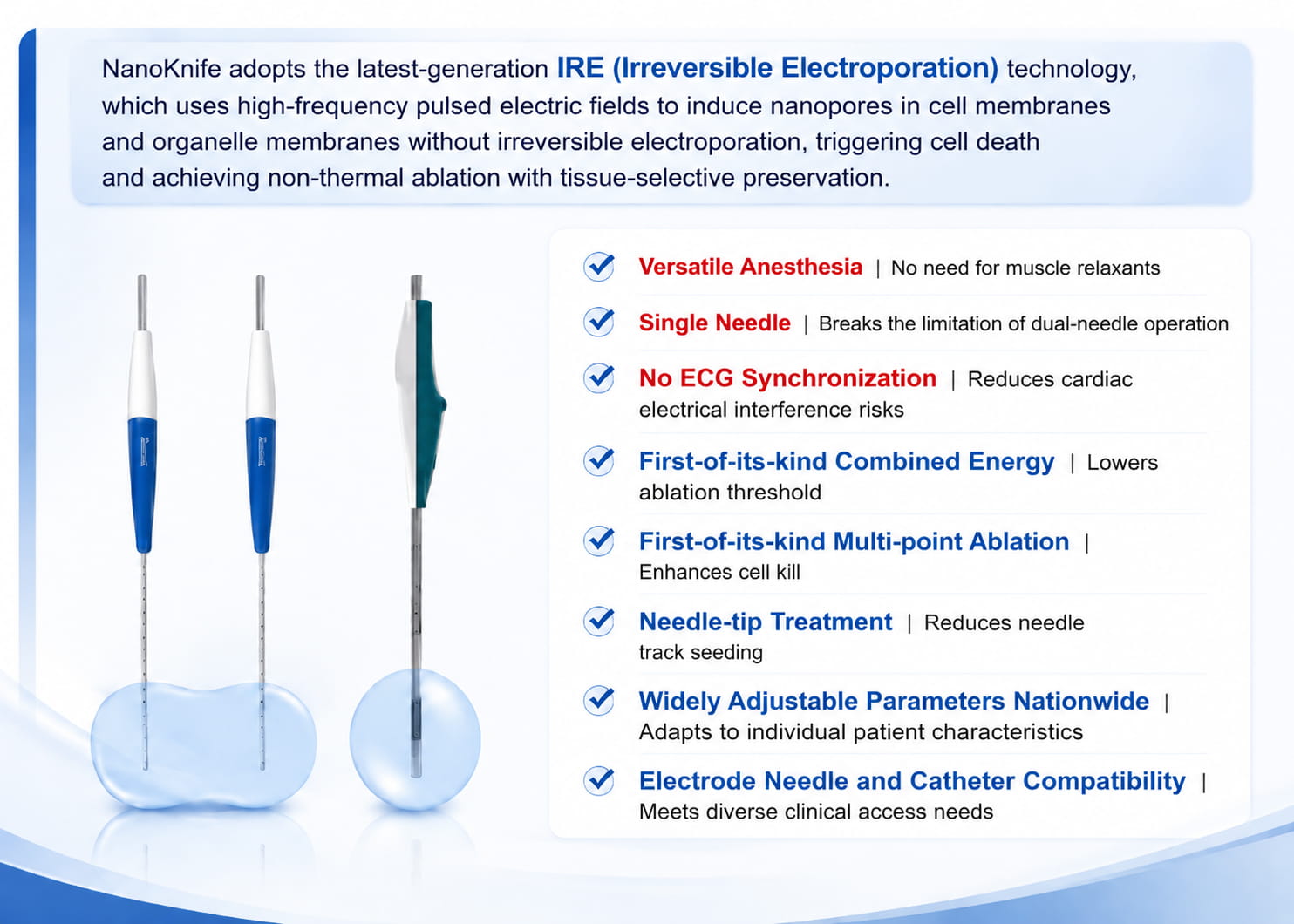
II. Technical Principles: From Irreversible Electroporation to Broadband Synergistic Pulses
2.1 Basic Principles of IRE Technology
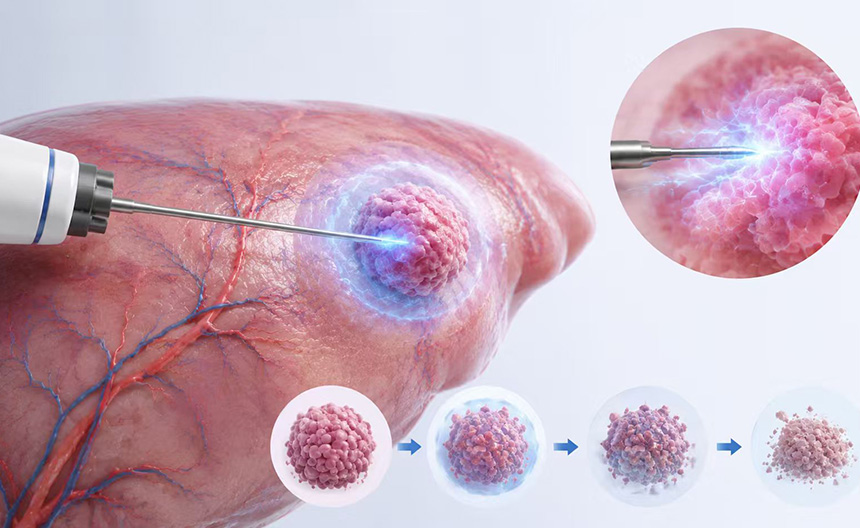
Irreversible Electroporation (IRE) technology, also known as the ‘Nanoknife’, is a non-thermal ablation technique based on bioelectrical effects. Its core principle involves applying a high-voltage pulsed electric field to the tumour cell membrane, inducing structural rearrangement of the lipid bilayer and forming nanoscale hydrophilic pores. When the electric field strength exceeds a critical threshold, these pores cannot repair themselves, leading to irreversible electroporation of the cell membrane and ultimately causing cell death. Unlike traditional thermal ablation techniques such as radiofrequency ablation and microwave ablation, IRE is a non-thermal ablation technique with two key advantages: firstly, it is not affected by the ‘heat sink effect’, allowing important structures such as blood vessels, bile ducts, pancreatic ducts and nerves to be preserved whilst ablating tumour tissue; secondly, it possesses selective ablation characteristics, enabling precise lesion removal in the treatment of tumours located in complex anatomical regions.
2.2 Technical Bottlenecks of Conventional IRE
Although IRE offers significant theoretical advantages, conventional IRE technology has long faced two key bottlenecks in its clinical implementation.
Bottleneck 1: Dependence on general anaesthesia and muscle relaxants. During traditional IRE treatment, the release of high-voltage pulses triggers intense skeletal muscle contractions in patients, typically necessitating general anaesthesia and the administration of large doses of muscle relaxants to complete the procedure. This not only increases anaesthetic risks and procedural complexity but also limits treatment access for some patients who cannot tolerate general anaesthesia.
Bottleneck 2: Complex multi-needle array configuration. Traditional IRE technology relies on an array of multiple parallel electrode needles, placing high demands on the clinician’s experience, the puncture trajectory, the tumour location and the availability of supporting equipment. Multi-needle procedures entail a steeper learning curve, higher treatment costs and a greater risk of puncture-related trauma. The requirements for ‘general anaesthesia and muscle relaxants’ and the need for ‘multi-needle array configuration’ have long been the key bottlenecks limiting the widespread adoption of IRE technology.
2.3 Principles of the Third-Generation IRE Technology in the Vena Knife
The technology behind the Vena Knife stems from over two decades of continuous research by Professor Yao Chenguo’s team at Chongqing University in the field of pulsed electric field tumour therapy. Since 2000, Professor Yao’s team has applied traditional high-voltage technology across biomedical fields, pioneering research into medical techniques utilising irreversible electroporation via pulsed electric fields, and publishing the world’s first academic research paper in this field in 2004. Over the past two decades, the team has successively introduced two generations of IRE technology: microsecond pulsed electroporation technology (conventional IRE) and high-frequency composite pulsed electric field electroporation technology (HF-IRE). The Wiener Knife is a third-generation IRE technology born out of more than two decades of research accumulation and the experience gained from two generations of product iterations.
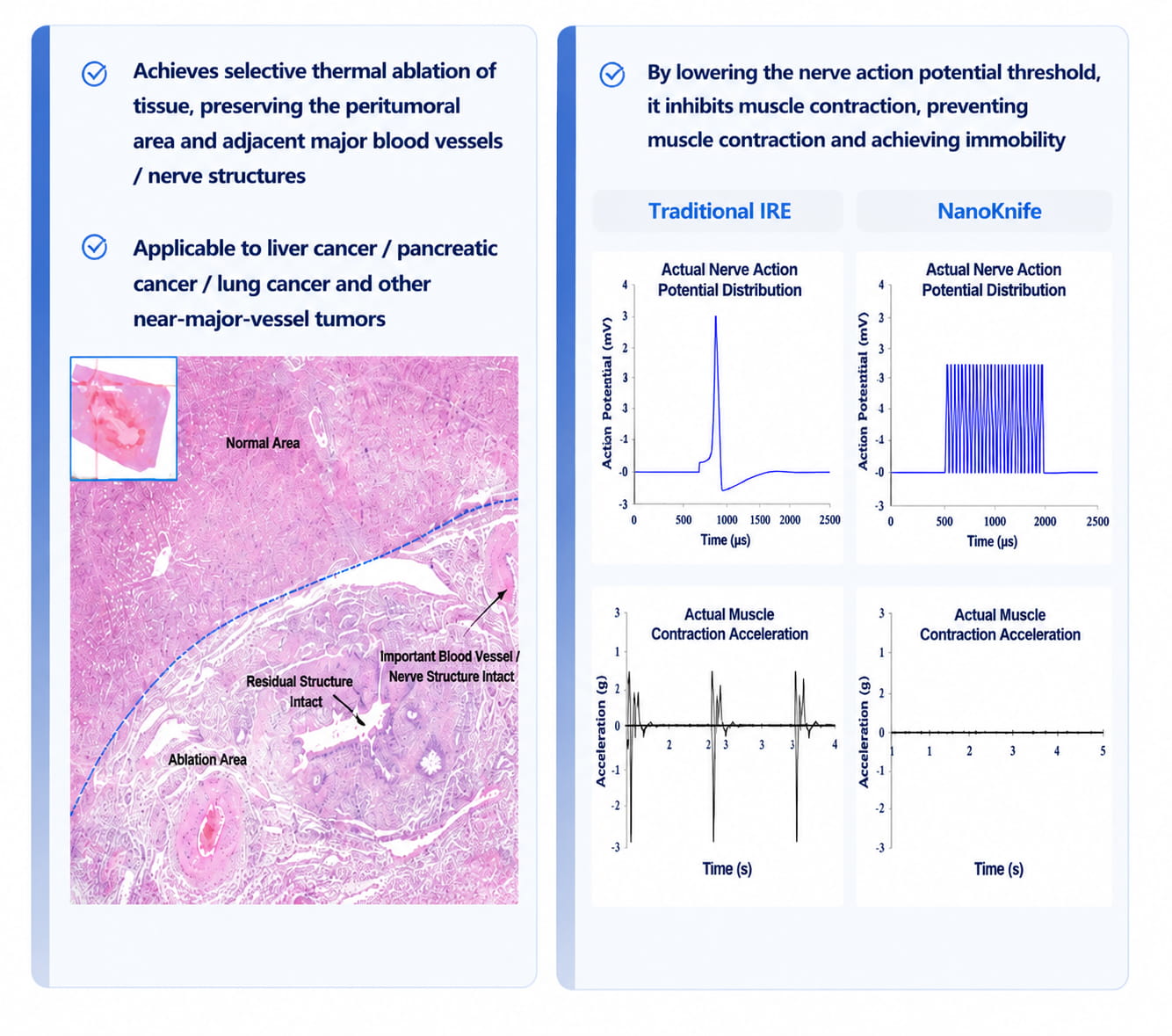
The core technological breakthrough of the Wiener Knife lies in its original broadband synergistic (SIRE) technical approach. Unlike traditional IRE, which utilises a single-frequency pulse electric field, the Venera Knife employs a broad-spectrum, multi-parameter synergistic pulse waveform capable of acting on multiple sites on both intracellular and extracellular membranes. Physically, this mechanism implies that the pulse electric field generates a synergistic effect across multiple frequency dimensions, thereby enhancing the cytotoxic effect on tumour cells whilst significantly lowering the tissue ablation threshold and expanding the ablation range. Specifically:
Multi-site killing mechanism: Whilst conventional IRE primarily acts on the extracellular membrane, the Venera Knife’s broadband synergistic pulses simultaneously target both the cell membrane and organelle membranes (such as the mitochondrial membrane and endoplasmic reticulum membrane), inducing irreversible multi-site electroporation. This multi-site killing not only increases the cell death rate per treatment session but also reduces the likelihood of tumour cells developing resistance.
Reduced ablation threshold: The broad-spectrum synergistic energy design enables effective ablation to be achieved at lower electric field intensities, thereby significantly reducing the risk of electric field exposure to surrounding normal tissue.
Expanded ablation range: The ablation range of a single needle set can exceed 7 cm, far surpassing that of conventional IRE.
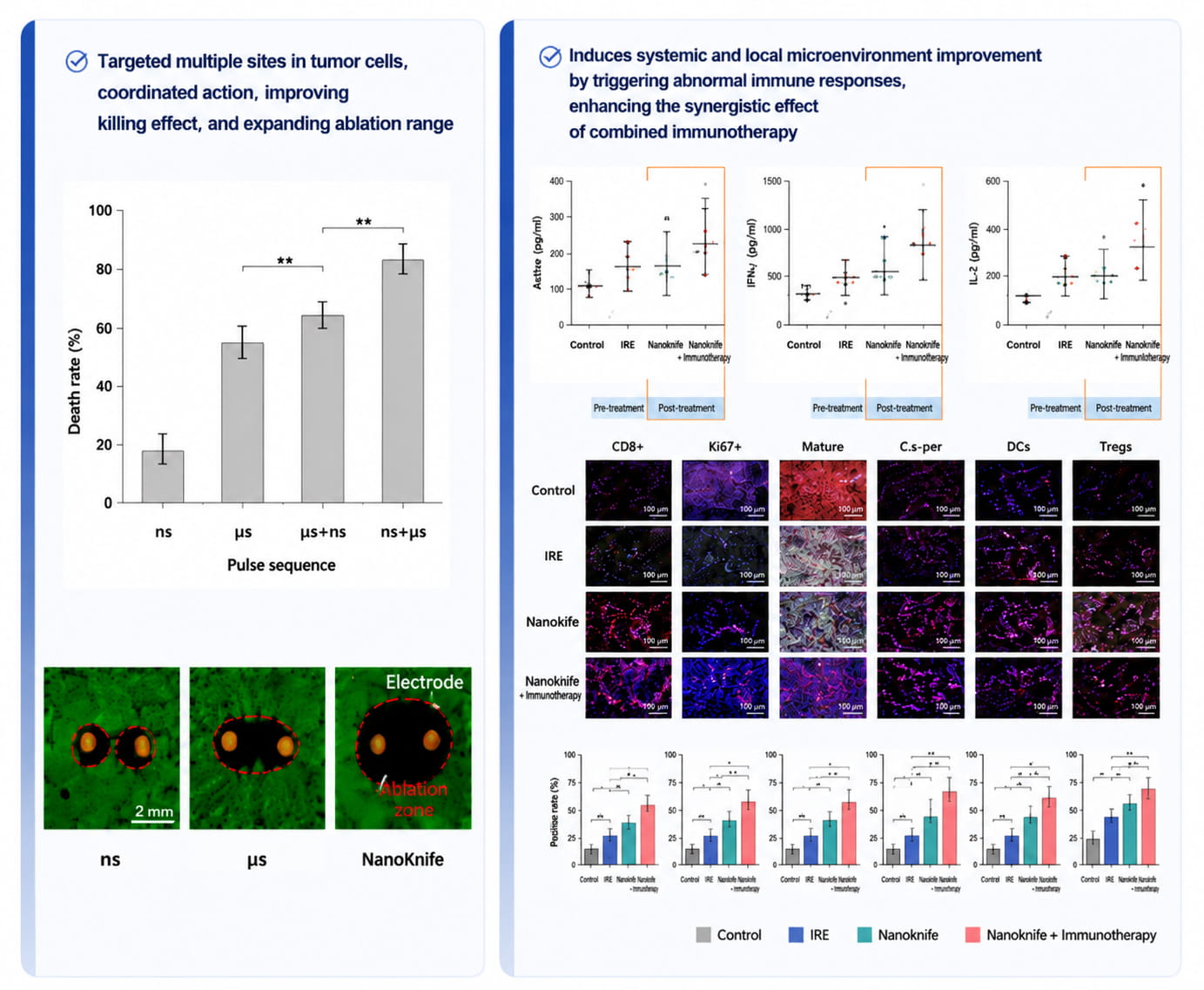
2.4 Core Breakthrough: From ‘General Anaesthesia with Multiple Needles’ to ‘Local Anaesthesia with a Single Needle’
The reason the VenaKnife has been able to achieve this leap from ‘general anaesthesia’ to ‘local anaesthesia’ and from ‘multiple needles’ to ‘a single needle’ is precisely due to the systemic transformation brought about by the aforementioned broad-spectrum synergistic technology.
Mechanism of true local anaesthesia: The fundamental reason why traditional IRE requires general anaesthesia and muscle relaxants is the intense muscle contractions triggered by single-frequency pulses. Through its wide-spectrum synergistic pulse waveform design, the VenaKnife significantly reduces the intensity of stimulation to the neuromuscular junction. Clinical validation demonstrates that, without the need for muscle relaxants or local anaesthesia, the VenaKnife achieves an effective ablation range that matches or exceeds that of traditional IRE under general anaesthesia with muscle relaxants. Patients remain fully conscious and pain-free throughout the procedure, thereby avoiding the need for endotracheal intubation and the risk of anaesthetic complications associated with general anaesthesia.
Innovation in single-needle ablation electrodes: The VenaKnife features a pioneering design—China’s first bipolar single-needle IRE ablation electrode—which marks a paradigm shift from ‘multi-needle parallel’ to ‘single-needle ablation’. The single-needle design not only significantly improves operational convenience for clinicians and shortens the learning curve, but also reduces the number of electrodes required and lowers treatment costs. It is worth noting that whilst the VenaKnife supports effective single-needle ablation, it is also compatible with traditional multi-needle array configurations, providing clinicians with flexible options. Surgical duration can be reduced to within 15 minutes, with a single-needle ablation range exceeding 7 cm.
It is precisely these innovative designs that have made the VenaKnife the world’s first steep-pulse ablation system to integrate steep-pulse technology, local anaesthesia, single-needle ablation and bipolar catheters, ushering in a new era in tumour ablation therapy.
2.5 Auxiliary Technical Features
The VenaKnife also offers a number of auxiliary technical advantages:
No ECG synchronisation required: Its low cardiac stimulation characteristics eliminate the complex requirements of ECG synchronisation, simplifying the operational procedure.
Needle tract management design: Effectively reduces the risk of bleeding and displacement at the needle insertion site.
Wide range of adjustable parameters: Allows for personalised parameter settings according to the requirements of different indications.
Compatibility with electrode needles and catheters: Meets the diverse needs of clinical interventional procedures.
Excellent immunological response: Tumour antigens released following ablation with the VenaKnife can activate the body’s immune response, enabling it to serve as a potent adjuvant for immunotherapy and cell therapy, thereby achieving synergistic effects in combination therapy.
III. Technical Comparison: Evolutionary Map of Fourth-Generation Technologies
To fully understand the technical positioning of the VenaKnife, a systematic comparison from the perspective of technological evolution is required.
3.1 Comparison with Traditional Thermal Ablation Technologies (Radiofrequency/Microwave/Cryoablation)
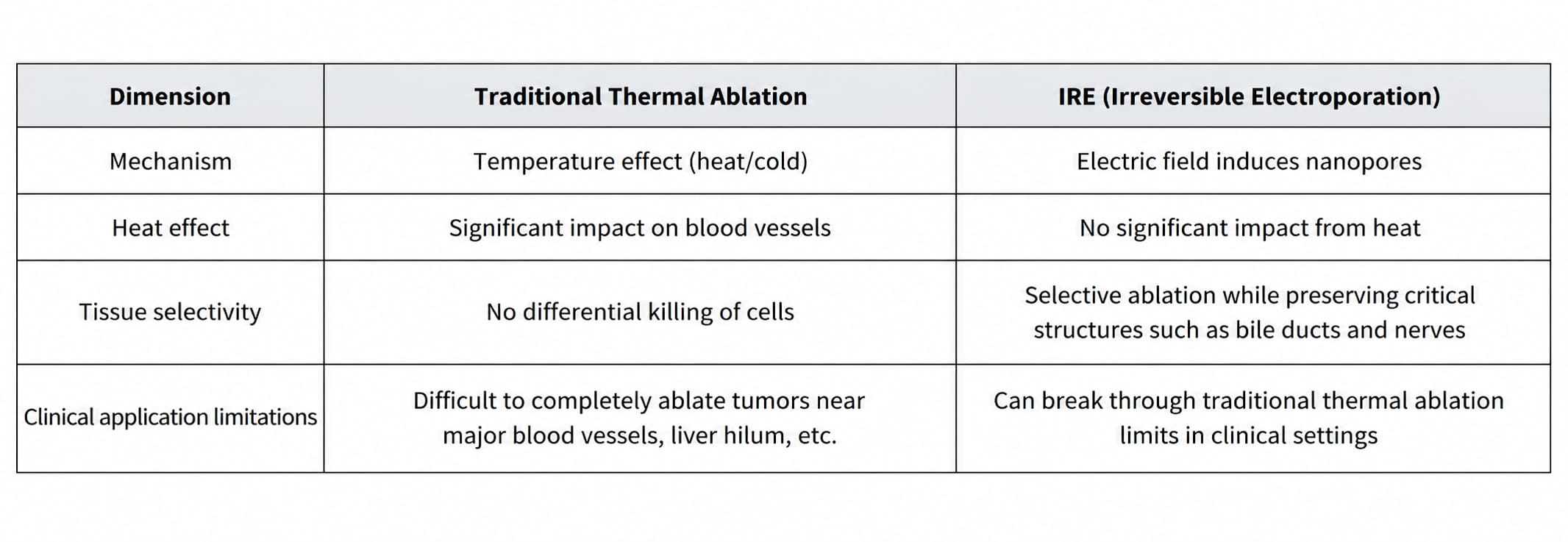
Dimension Traditional Thermal Ablation VenaKnife (IRE)
Mechanism of Action Thermal effect (thermocoagulation/cryoablation) Electric field-induced membrane perforation
Heat Sink Effect Significantly affected by vascular blood flow Not affected by the heat sink effect
Tissue Selectivity Non-selective destruction Selective ablation of lesions whilst protecting vital vessels and nerves
Clinical Application Limitations Difficulty in achieving complete ablation in specific areas such as near major blood vessels or the hepatic hilum Capable of overcoming clinical contraindications associated with traditional ablation techniques
Traditional thermal ablation relies on thermal effects to destroy tumours; however, the ‘heat sink effect’ makes it difficult to achieve complete ablation of tumours near major blood vessels, and it is prone to causing thermal or cold damage to healthy surrounding tissues such as nerves and blood vessels. As a non-thermal ablation technique, the VenaKnife enables precise ablation of lesions whilst protecting vital vessels and neural structures, allowing solid tumours in specific locations—such as tumours at the hepatic hilum and pulmonary hilum, as well as pancreatic cancer adjacent to major blood vessels—to be treated under local anaesthesia.
3.2 Comparison of Three Generations of IRE Technology
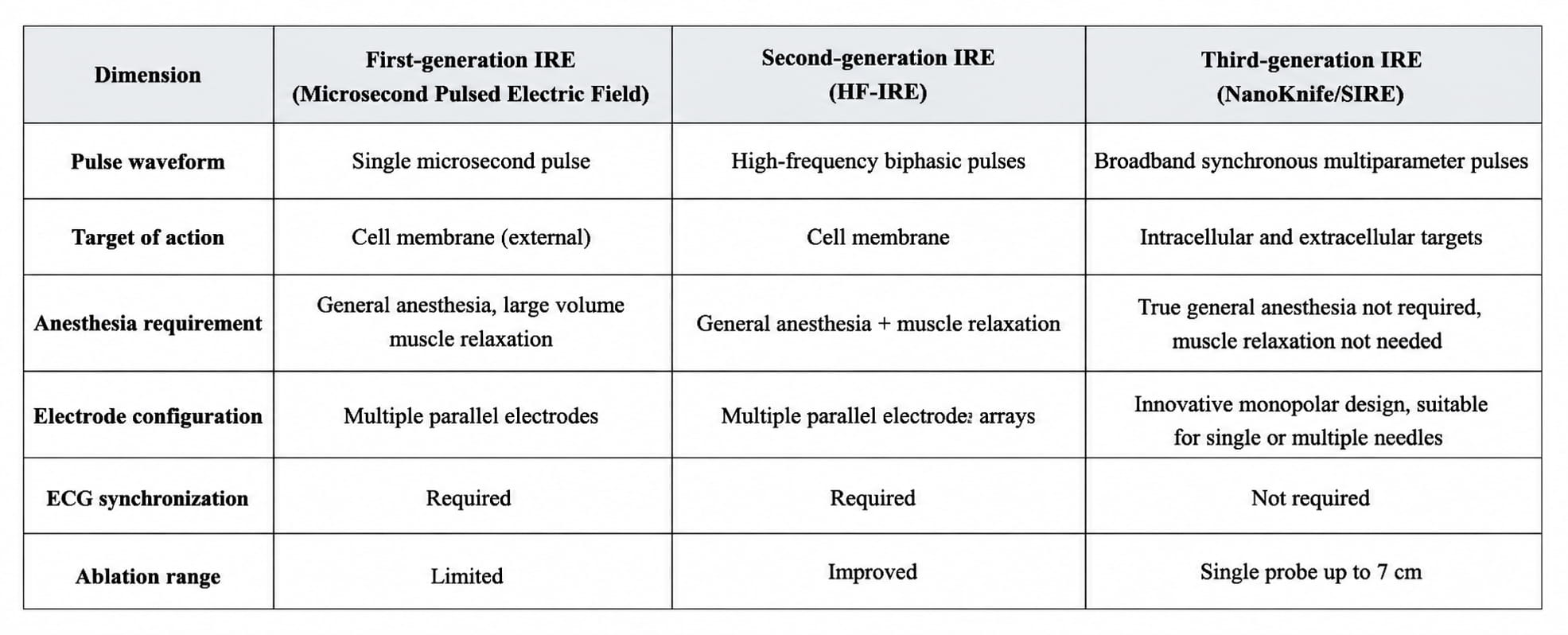
Dimension First-generation IRE (microsecond pulses) Second-generation IRE (HF-IRE) Third-generation IRE (VenaKnife/SIRE)
Pulse waveform Single microsecond pulse High-frequency composite pulse Broad-band synergistic multi-parameter pulse
Site of action Extracellular membrane Cell membrane Multiple sites on intracellular and extracellular membranes
Anaesthesia requirements General anaesthesia + substantial muscle relaxants General anaesthesia + muscle relaxants True local anaesthesia, no muscle relaxants required
Electrode configuration Multi-needle parallel array Multi-needle parallel array Pioneering single-needle ablation, compatible with multi-needle configurations
ECG synchronisation Required Required Not required
Ablation range Limited Some improvement Over 7 cm per array
First-generation IRE (microsecond pulse electroporation technology): utilises a single microsecond-level pulse, requiring general anaesthesia and substantial muscle relaxants, a multi-needle array, and ECG synchronisation; this results in a high clinical threshold and poses significant challenges to widespread adoption.
Second-generation IRE (High-Frequency Composite Pulse Electric Field Electroporation Technology, HF-IRE): Whilst the waveform has been optimised, it has not fundamentally resolved the issues of multi-needle array configuration and reliance on anaesthesia.
Third-generation IRE (Weina Knife/Broadband Synergistic Steep-Rise Pulse Technology, SIRE): Achieves multi-site damage to intracellular and extracellular membranes through broadband synergy, resulting in a significant leap in both ablation efficiency and range. Its operating principle is a world first, and the underlying theory and technology are at the forefront of international standards.
IV. Intellectual Property Strategy: 144 Patents Forming a Technological Moat

The Venera Knife has established a comprehensive intellectual property protection system. To date, a total of 144 invention patents have been filed domestically and internationally, including 17 PCT international invention patents. Crucially, VenaKnife’s core principle-level invention patents have been granted in both China and the United States—this signifies that the originality of the technology at the conceptual level has been doubly confirmed by the world’s two most significant patent jurisdictions, laying a solid intellectual property foundation for the product’s expansion into international markets.
V. Honours and Recognition: From the National Innovation Track to the Highest Award for Disruptive Technology
The innovative value of VenaKnife’s technology has received multiple authoritative national recognitions:
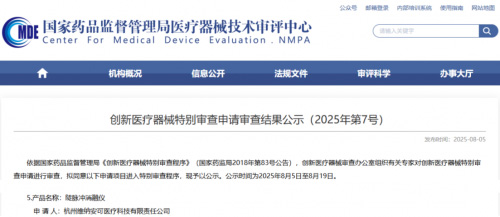
National Innovative Medical Device Designation (August 2025): In August 2025, the VenaKnife was formally approved by the Centre for Technical Review of Medical Devices under the National Medical Products Administration (NMPA), successfully included in the ‘Special Review Procedure for Innovative Medical Devices’, and officially announced by the NMPA in its General Administration Announcement No. 7 of 2025. This designation fully affirms the VenaKnife’s original breakthrough in the ‘local anaesthesia + single-needle’ approach and its clinical value.
Top Prize at the National Disruptive Technology Innovation Competition (January 2026): At the finals of the 14th China Innovation and Entrepreneurship Competition’s Disruptive Technology Innovation Contest, the VenaKnife project stood out from 891 high-quality entries nationwide to win the competition’s top prize. The competition was organised by the Torch High-Tech Industry Development Centre of the Ministry of Industry and Information Technology, covering six cutting-edge fields: future materials, future manufacturing, future information, future energy, future space and future health. The VenaKnife project received unanimous recognition from judges and experts for its core technological breakthrough—“Pulse Regeneration, Vena Empowerment—VenaKnife Tumour Ablation System”—and its industrialisation capabilities. In his address, Zhang Shouhua, Director-General of the Department of High-Tech Industries at the Ministry of Industry and Information Technology, noted that the rapid development of disruptive technologies such as artificial intelligence, quantum information and biomanufacturing is becoming a key driver for the emergence of future industries.
VI. Indications and Clinical Applications
The VenaKnife has currently been approved for the treatment of liver and pancreatic tumours. As a platform technology, the principles underlying the VenaKnife are also expected to be extended to other disease areas, such as atrial fibrillation and chronic obstructive pulmonary disease (COPD), addressing clinical challenges such as the need for general anaesthesia during cardiac electrical stimulation and insufficient ablation depth. Furthermore, the VenaKnife can be applied to the treatment of both benign and malignant conditions affecting the lungs, prostate and thyroid, amongst others.
Research indicates that the VenaKnife can be combined with comprehensive therapies such as chemotherapy and immunotherapy to provide personalised, minimally invasive solutions for complex mid- to late-stage solid tumours. Its excellent immunological response and ability to improve the tumour microenvironment make it the most effective tool currently available for tumour debulking and a potent adjuvant for immunotherapy and cell therapy.
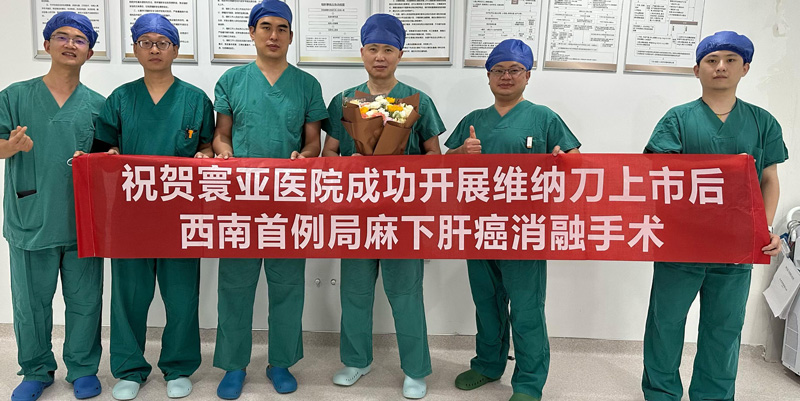
23 July 2026 Clinical Milestone: First VenaKnife procedure in Southwest China successfully completed at Huanya Hospital
On 23 July 2026, the first VenaKnife tumour ablation procedure in Southwest China was successfully completed at Huanya Hospital. The procedure was led by the team of Professor Liao Zhengyin, a Grade 1 expert at West China Hospital. The patient, who had hepatocellular carcinoma in the caudate lobe of the liver, was classified as Child-Pugh Class C for liver function. The tumour was situated in close proximity to the duodenum, inferior vena cava and colon, presenting an extremely complex anatomical configuration. Conventional treatment options (including surgical resection, liver transplantation and traditional thermal ablation) were deemed unsuitable due to the patient’s extremely poor liver reserve and the risks associated with the proximity to vital organs, leaving the clinical situation in a seemingly intractable predicament.
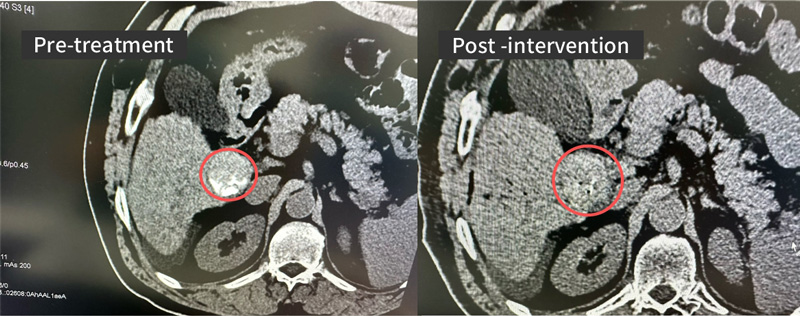
Faced with this extreme challenge, Professor Liao Zhengyin’s team decisively deployed the VenaKnife Broadband Synergistic Steep-Pulse Tumour Ablation System, using a single-needle ablation electrode to precisely puncture the tumour target area under local anaesthesia. Throughout the entire pulse delivery process, the patient remained fully conscious, with stable vital signs and reported virtually no discomfort; there was no need for general anaesthesia or muscle relaxants, nor was cardiac electrical synchronisation required. Immediate post-operative imaging assessment revealed that the ablation area completely covered the target lesion with clear and sharp boundaries; no signs of thermal or electrical injury were observed in the adjacent duodenum, inferior vena cava or colon, meeting the clinical expectation of ‘perfect ablation’. The entire procedure was completed in a very short time, and the patient was safely returned to their ward post-operatively without any complications.
The successful completion of this procedure not only fully validated the safety and efficacy of the VenaKnife under extremely complex anatomical conditions (liver function class C, with the lesion adjacent to multiple vital structures), but also highlighted the unique clinical value of the ‘single-needle local anaesthesia’ approach in breaking through traditional treatment barriers— —it has opened up a viable new path for minimally invasive treatment for patients with end-stage or locally advanced liver cancer who were previously deemed ‘untreatable’. From obtaining NMPA registration approval in May 2026 to the successful completion of the first high-complexity procedure in Southwest China in July, the VenaKnife achieved the transition from technical certification to clinical application within just two months, vividly illustrating how original, innovative technology can provide a precise response to clinical challenges.
VII. Conclusion
The technological trajectory of the Vena Knife clearly illustrates a complete innovation chain stretching from basic research to industrial application: beginning with the pioneering exploration of the biological effects of high-voltage pulsed electric fields in a laboratory at Chongqing University in 2000, it has progressed through two generations of technological development—microsecond pulses and high-frequency composite pulses—ultimately achieving the clinical breakthrough of ‘single-needle local anaesthesia’ with the third-generation broadband synergistic steep-front pulse technology. An intellectual property portfolio comprising 144 patents, the granting of principle-level core patents in both China and the United States, and the dual recognition of National Innovative Medical Device status and the highest award for disruptive technology collectively form a comprehensive technical profile of this Chinese-originated technology. As the world’s first single-needle synergistic steep-pulse ablation system for local anaesthesia, the journey of the Vena Knife represents not only a breakthrough in taking a technology from concept to reality, but also epitomises China’s transition from follower to leader in the cutting-edge field of tumour ablation using pulsed electric fields.