

Professor Liao Zhengyin Video Series
Explore the clinical experience, medical insights, and real patient stories shared by an interventional oncology expert
The patient had previously received interventional treatment for a locally advanced lung tumor, after which another tumor was discovered in the renal pelvis. Due to the patient’s advanced age and limited physical tolerance, conventional surgery was not an option. Under local anesthesia, Professor Liao Zhengyin and his team used image guidance to precisely insert a cryoablation probe into the tumor. The resulting “ice ball” completely covered the visible lesion while avoiding important surrounding structures, including blood vessels and the double-J stent. There was almost no bleeding during the procedure, the patient experienced no significant discomfort, and the puncture wound was minimal. The entire procedure took only 55 minutes.
Professor Liao Zhengyin, a specially appointed expert at Chengdu UNI-ASIA Hospital and a renowned senior specialist in interventional therapy in China, was invited to attend the congress and deliver a presentation titled “Cryoablation for Malignant Tumors of the Maxillary Sinus.” He systematically presented his team’s clinical exploration and practical achievements in the minimally invasive treatment of malignancies at this rare site. Drawing on representative cases, Professor Liao explained in detail the technical approach, patient selection, efficacy assessment, and safety management of cryoablation when facing challenges such as the complex anatomy of the maxillary sinus, limited surgical visibility, and proximity to vital organs.
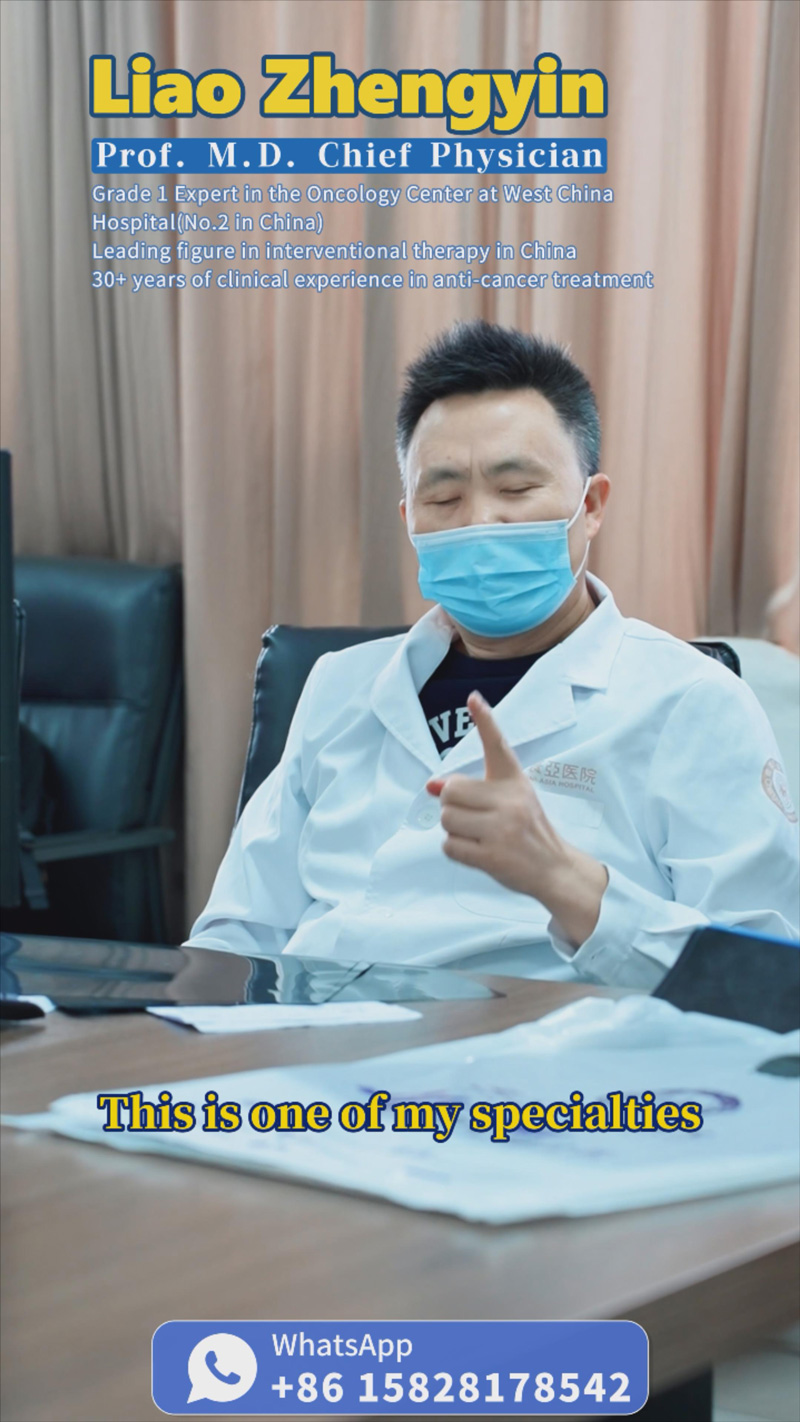
With many years of focused clinical practice, Professor Liao Zhengyin has remained at the forefront of precise, minimally invasive interventional treatment for liver cancer—from TACE (transarterial chemoembolization) and hepatic arterial infusion chemotherapy to ablation and radioactive seed implantation. His goal has always been clear: to achieve the greatest possible tumor control with the least physiological burden, helping every patient pursue a better quality of life and longer survival.
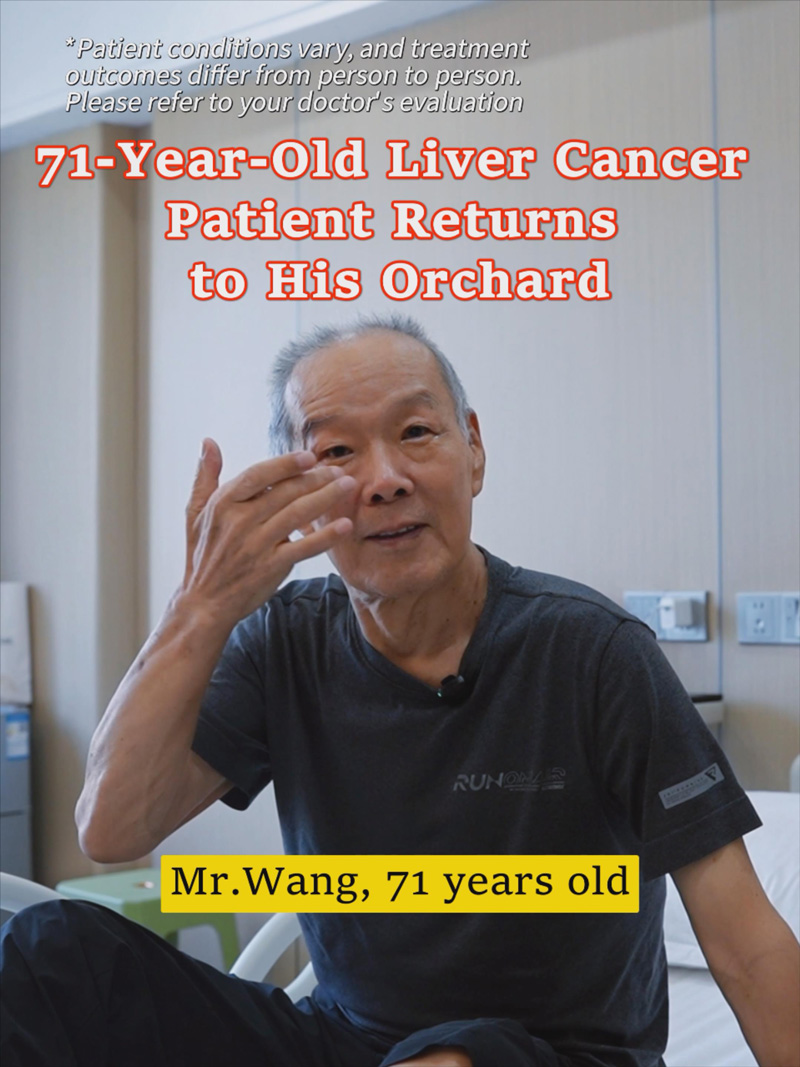
Mr. Wang, 71, was diagnosed with liver cancer at the end of 2022. Over the next three years, he visited several hospitals, but each concluded that there were few viable treatment options. When he came to UNI-ASIA Hospital, Professor Liao Zhengyin reassessed his condition. After three minimally invasive interventional procedures, Mr. Wang’s disease was brought under effective control. He has now achieved clinical remission following medical evaluation and returned to normal life.
An ovarian cancer patient visited several hospitals but was unable to obtain a definitive diagnosis: “We cannot determine whether it is ovarian squamous cell carcinoma,” “What if the cancer becomes resistant to chemotherapy?” and “How can treatment begin when nothing has been confirmed?” Professor Liao Zhengyin, however, had a clear approach: “Whether or not it is squamous cell carcinoma, the overall treatment strategy is the same. You are concerned about drug resistance, but any type of tumor may develop resistance. Treatment should still proceed one step at a time.”
This patient developed intrahepatic recurrence and metastasis after liver cancer surgery, and the disease had progressed to a middle-to-late stage. Because the remaining liver function reserve was insufficient, another surgical resection was not possible. See the treatment recommendation provided by Professor Liao Zhengyin.
Professor Liao Zhengyin explains that for patients with multiple unresectable lung lesions, high-concentration chemotherapy drugs can be delivered locally through bronchial arterial infusion to achieve comprehensive tumor control across the entire affected area. Radiotherapy can be added for residual lesions or areas that cannot be covered by ablation. After interventional chemotherapy and radiotherapy, any remaining isolated focal lesions can then be treated with ablation to minimally invasively eradicate residual active disease.
Follow us to explore more videos